
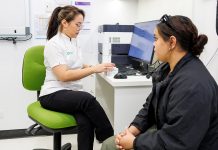






With palliative care an increasingly important part of pharmacists’ practice, a new community of practice has been set up to foster collaboration across the country.
The PSA recently launched the national Palliative Care Community of Practice, developed as part of Palliative Care Australia’s Quality use of Community Palliative Care Medicines Project. The community of practice is free to join and available to both PSA members and non-members.
The development comes as demand for palliative care across all practice settings is set to grow around 50% by 2035 and double by 2050, said PSA Senior Manager, Project Innovation and Operations, Leah Robinson.

‘All pharmacists, no matter their practice setting, are going to start experiencing more exposure to palliative patients and families and will need to strengthen their professional support for them,’ she said. ‘But those pharmacists need support as well.’
The idea flowed from the high volume of interest shown by pharmacists in response to PSA’s palliative care initiatives over recent years, including strong positive feedback through the ASPIRE Palliative Care Foundation Training Program.
‘We thought, why not create a space for questions and shared discussions through a national community of practice – so that students, interns and pharmacists at any stage of their career, or anyone working in or with an interest in palliative care could access it,’ she said.
What does the community of practice offer?
With more pharmacists set to care for people receiving palliative care, the community of practice aims to connect and empower pharmacists across the country – in any location or practice setting.
A key focus is optimising medicines management to enhance safety and effectiveness for patients, carers and families – regardless of where they are cared for or choose to die.
‘Those who work in palliative care can share their experiences and knowledge of medications, and ways of communicating – about goals of care and the family and network around them,’ Ms Robinson said.
Pharmacists who are new to the field, interested in moving into it, or are unsure how best to approach a situation can draw on that expertise.
‘They have a whole community of practice to lean on and ask these questions in a safe, supportive environment,’ she said.
Since the launch of the community of practice in May 2026, members have posted questions, sought advice and shared research.
‘If there’s a new education piece, a new referencing document or a guideline, it’s often shared very quickly,’ Ms Robinson said.
Why does palliative care need a team approach?
Patients’ needs can vary widely depending on their setting, location and existing conditions. Transitions between care settings and the need for clear communication with carers, relatives and other health professionals add further layers.
‘Pharmacists are part of a very big healthcare team that wraps around the patient and supports their goals of care,’ Ms Robinson said.
‘Everyone’s going to have different goals of care, and the team needs to be responsive to these.
‘Anticipatory prescribing and timely access to medicines can really make a difference to people receiving palliative care, particularly in the terminal phase.’
What wellbeing resources are available?
Palliative care means working with patients who are nearing the end of their lives, and their families and carers.
‘Once a patient has passed, their family and carers are left behind grieving – and community pharmacists will continue to see those people coming into their pharmacies,’ Ms Robinson said.
‘Continuing the support and connection with those family members is important.
‘Pharmacists are well placed to recognise when someone may be struggling with their grief, and may be able to provide, or recommend, additional support.’
In supporting palliative patients and their families, it is important for pharmacists to develop their own self-care strategies.
The community of practice can direct pharmacists to PSA’s ASPIRE training program, which concludes with a module dedicated to grief, bereavement and self-care.
Who can join the community of practice?
The PSA Palliative Care Community of Practice is chaired by palliative care pharmacist Penelope Tuffin and guided by an eight-person leadership group, which helps shape the community’s priorities: Penny Liddell, Professor Debra Rowett PSM, Lorna Chess-Williams, Karalyn Huxhagen, Bessie Wong, Jacqueline Meyer, Catherine Laird and Robert Wojnar.
‘It is wonderful to be witnessing the start of something special – a community of pharmacists coming together to use our skills and compassion to improve care for people at the end of their lives,’ Ms Tuffin said.
Pharmacists interested in joining can sign up to the Palliative Care Community of Practice.