

 References: Therapeutic Guidelines

 Genevieve Adamo MPS (Image: Steve Christo Photography)[/caption]





Updated guidelines in the Australian Asthma Handbook were released in September 2025 with SABA-only therapy now considered risky in adults and adolescents. AP explores how pharmacists can change the conversation and promote better disease management with anti-inflammatory reliever (AIR) therapy so asthma flare-ups can be prevented.
Just under 3 million Australians live with asthma.1 The condition has the eighth-highest disease burden in the nation, and it is one of the most significant chronic conditions in children.2
Guided by the results of large trials,3 recommendations for asthma management in adults and adolescents are changing, and pharmacists need to be aware of updated guidelines. The Australian Asthma Handbook4 was updated in September 2025 to reflect new thinking on asthma care and management.
Overuse of short-acting beta2-agonists (SABAs) has been linked to poor asthma control and preventable hospitalisations.5
‘The evidence is that the risks of SABA alone have become clearer and that we were overusing a not very effective and not very safe therapy,’ says Professor Nick Zwar, Executive Dean of Bond University’s Faculty of Health Sciences and Medicine, and Chair of the Australian Asthma Handbook Guidelines Committee.
‘Budesonide-formoterol, taken only as needed, is recommended in place of SABA,’ he adds.
‘Maintenance and reliever therapy is now recommended as the next step up.’
The risks of SABA overuse include a lack of bronchodilator response over time, he says, and the possibility that some people may have quite a severe asthma attack and end up in the hospital emergency department, or hospitalised, when they don’t need to be.
There is very strong evidence6 to demonstrate that all adolescents and adults living with asthma should be treated with inhaled corticosteroids (ICS), says pharmacist and Clinical Executive Lead at the National Asthma Council Australia, Debbie Rigby FPS.
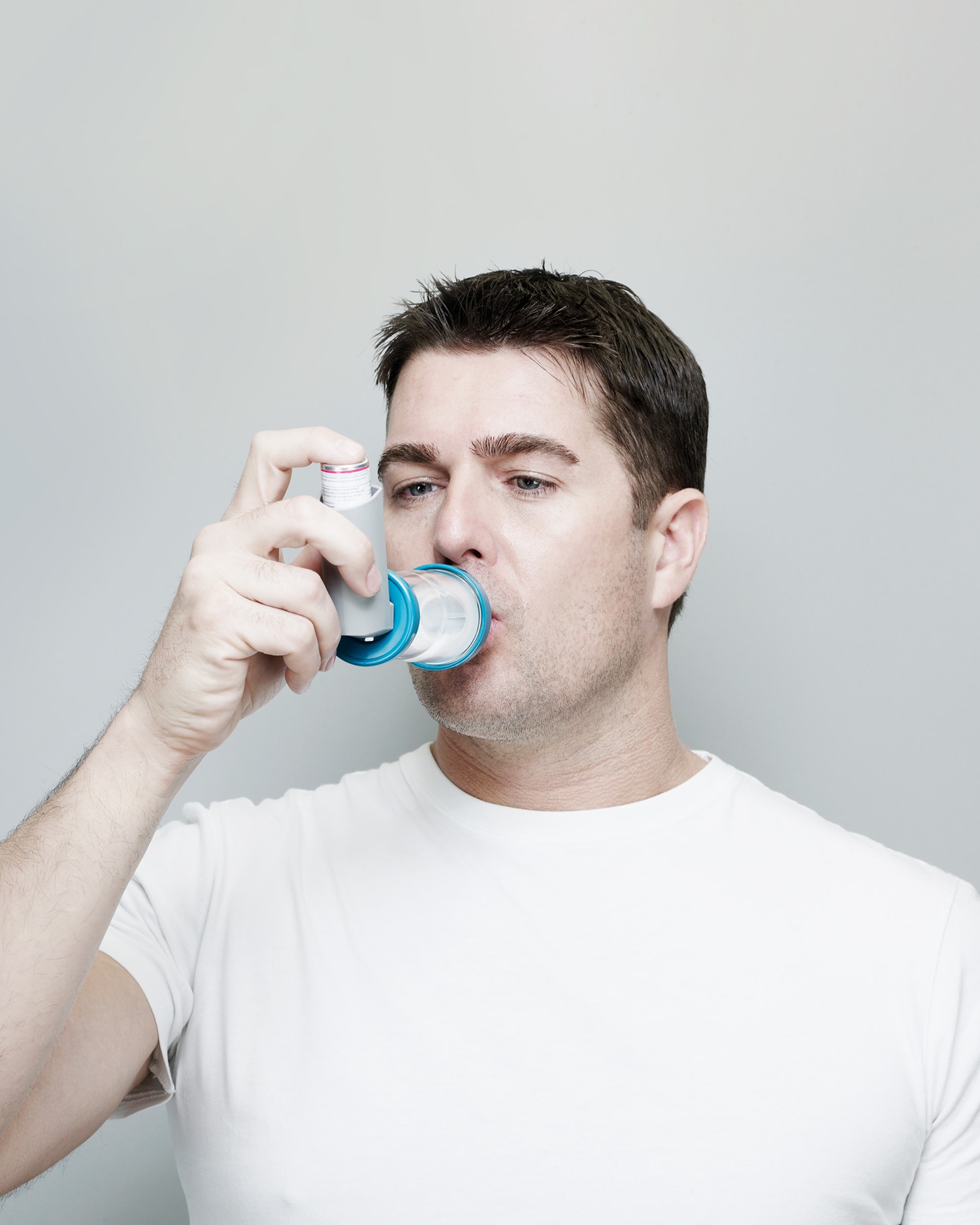 ‘Just having the SABA alone only treats one component of asthma, which is the bronchoconstriction, whereas having the low-dose ICS helps manage the inflammation and mucus production,’ she says. ‘I think that’s the biggest shift for us, pharmacists and doctors: helping patients to understand that asthma is a chronic inflammatory condition.’
Inadequately managed asthma can also be a life-threatening condition, Ms Rigby stresses, noting there were 474 asthma-related deaths in Australia in 2023.
‘Those deaths shouldn’t be happening. Many of those people who did die from asthma or asthma-related causes would have been perceived as having mild, intermittent symptoms,’ she says. ‘Without wanting to scare patients, we should be really highlighting the consequences of not having good control of their asthma.’
SABA overuse
Despite access to long-acting beta2 agonists (ICS–LABAs), SABA use remains high for a range of reasons. These include cost, convenience and patient reluctance to medicate every day when they are accustomed to using a reliever-only when they have an asthma attack, Ms Rigby says.
Health professionals understand that many people are reluctant to use a preventer inhaler, but health professionals need to help them understand that they have a ‘chronic inflammatory condition, which may flare up from time to time’. Effects of the cost-of-living crisis should not be underestimated either, she adds.
However, the price gap between over-the-counter salbutamol and prescription asthma medicines is now narrowing, she says, with 60-day dispensing for patients who are stable and, from January 2026, the co-payment for medicines being reduced from $31.60 to $25 per prescription.
The Australian uptake of Maintenance and Reliever Therapy (MART) has been slow, despite strong evidence and subsidy on the Pharmaceutical Benefits Scheme.7 Ms Rigby says the evidence of large-scale trials has shown the importance of shifting patients with mild asthma onto anti-inflammatory reliever therapy on an as-needed basis.
‘The evidence basically says it reduces the risk of severe exacerbations requiring ED (emergency department) or hospitalisation, or requiring oral corticosteroids,’ she points out.
Explaining asthma to patients
Pharmacy interventions in asthma management can be difficult because patients often don’t fully understand the underlying nature of the condition, Ms Rigby says.
‘Most people don’t understand what inflammation means,’ she says. ‘I explain that your lungs have a long-term sensitivity or irritability which we need to treat so they’re less reactive to stimuli, whether it’s a viral respiratory infection or exposure to tobacco smoke. And that underlying tendency in your lungs is not treated by SABA alone. So, we need to use something that will maximise your lung function and reduce the irritability of your lungs.’
Making sure patients understand the new recommendations on how asthma medicines should be used for optimal health benefits is a critical part of the conversation with patients who come into the pharmacy for an inhaler, according to Ms Rigby. ‘I think it’s just going to be a different conversation we have with patients in a community pharmacy setting, because we do have salbutamol available over the counter without a prescription,’ she says. And switching from over-the-counter medicines to prescription medicines requires a big behaviour shift for patients who have been living with asthma.
Ms Rigby has produced many education webinars on the subject and written widely about how patients can be encouraged to make the switch.8

‘It’s using all the behaviour change theories trying to motivate that person to change their behaviour, and that’s partly through education as well as support and just better understanding of the condition they’re living with,’ she says.
It’s important that patients understand asthma as an ongoing chronic inflammatory condition that can be bubbling away and then triggered, Ms Rigby says, and that they understand they can reduce the risk of flare-ups with the appropriate medicine.
‘They can have better control of their asthma so it doesn’t have an impact on their day-to-day activities – whether it’s going to school or work or doing exercise.’
Prof Zwar says that while non-prescription SABA will continue to be sold in pharmacies, pharmacists will now need to initiate conversations with patients living with asthma to ask whether they think SABA is the best treatment for them, and whether there’s a better option.
‘The answer to that question might often be “yes”, if adolescents and adults are just using SABA,’ he says. ‘There might still be a role for SABA alone in some children.’
It is important for pharmacists to consider how to start a conversation to help people living with asthma understand there is another approach they should consider and to encourage them to see their doctors to discuss the treatment alternatives, he says. ‘These are people who might have been using SABA for some time, and don’t see it as an issue,’ he adds.
Prescribing pharmacists step in
In Queensland, prescribing pharmacists are assisting patients living with asthma to manage their conditions,9 says pharmacist prescriber Demi Pressley MPS, who practises in Cairns.
‘Patients have responded really positively to pharmacist care and management of respiratory conditions,’ she says. ‘Patients have returned to say I changed their life through the treatment provided and the time, care and education I had provided.’
The ability to initiate or change to preventer therapy when a patient comes to the pharmacy to buy salbutamol, or when they report increased salbutamol usage, has shifted the focus and goals of patient interactions, she adds.
‘Rather than emphasising the importance of review and seeing their GP, I am able to conduct a comprehensive assessment with the patient and get them onto the most appropriate treatment at the time of their presentation, arrange appropriate follow-up and investigations – all while keeping their regular prescriber updated,’ Ms Pressley says.
What’s next
The future of asthma management will feature an increased use of biologics or monoclonal antibody therapy.10 This includes benralizumab, dupilumab, mepolizumab or omalizumab in conjunction with ICS-containing inhalers to control the condition, increased use of spirometry11 and a growing reluctance to prescribe oral corticosteroids.12
Overuse of oral corticosteroids such as prednisone and prednisolone can lead to a range of health problems, says Prof Zwar, including damage to bone health.
‘We’re probably using more courses of oral steroids than we need to, more than is safe for patients if it’s for current use.’ 
Ms Rigby says there is a growing awareness of the harms associated with repeated doses of oral corticosteroids.
‘If you’re talking about 4–5 courses [as a recommended maximum] over your lifetime, that can very quickly add up,’ she says.
Many people living with asthma have been prescribed preventers, usually ICS-LABA preventers. But their pharmacists can see they have poor adherence from their dispensing history, perhaps by noting an overuse of SABAs, Ms Rigby says.
There’s a growing body of evidence demonstrating the benefits of long-term use of biologics as steroid-sparing medicines and providing better asthma control for some patients, she adds.
‘Some people might think “it’s just something I have to live with” – but we can help them understand that there are new biologics which, if they’re eligible, likely will improve their quality of life, as well as avoid the consequences of poor asthma control.’
Biologics as an option
While ICS remains an important feature of the asthma management landscape, if patients are on a high dose and continue to have inadequately controlled asthma – or they are repeatedly prescribed doses of oral corticosteroids – then biologics are an important further treatment option, according to Prof Zwar.
‘The new handbook will assist in promoting that, and health professionals, pharmacists, GPs and practice nurses will be part of getting the message out that other therapies are available, and they will help some people,’ he adds.
Monoclonal antibody treatments13 are now used for a range of autoimmune conditions, including Crohn’s disease, ulcerative colitis and psoriasis. ‘Practitioners and patients are gradually getting to understand more about these new types of medicines, but new ones arrive all the time, so it’s not easy to keep up, and their application has become broader in a fairly short space of time,’ he notes.
The guidelines and the diagnosis algorithm in the new handbook strengthen the role of spirometry when diagnosing asthma, he says.
A lack of access to good quality spirometry in primary care is a major barrier to diagnosis for people with respiratory symptoms.
‘The number of practices doing spirometry decreased during the pandemic for a range of reasons, with concerns about infection control, and it hasn’t bounced back to the extent that we’d all like to see,’ Prof Zwar says.
Access to spirometry for children and young people, he adds, can be even more of a challenge because respiratory physicians and paediatric services offering spirometry are mainly in Australia’s larger cities.
‘Accurate diagnosis is important,’ he stresses, ‘and at times this will require referral to a service that can provide pre- and post-bronchodilator spirometry and other assessments such as a fractional exhaled nitric oxide test.’
References
- Australian Bureau of Statistics. Asthma. 2023;Dec. At: www.abs.gov.au/statistics/health/health-conditions-and-risks/asthma/latest-release
- Asthma Australia. Asthma burden in 2024. 2024;Dec. At: https://asthma.org.au/health-professionals/asthma-digest/asthma-burden-in-2024/
- Bateman ED, Reddel HK, O’Byrne PM, et al. As-needed budesonide-formoterol versus maintenance budesonide in mild asthma. N Eng J Med 2018;378:1877–87. At: www.nejm.org/doi/full/10.1056/NEJMoa1715275
- National Asthma Council Australia. Australian asthma handbook. Version 2.2. Melbourne: NACA; 2023. At: www.asthmahandbook.org.au
- Medicines and Healthcare products Regulation Agency. Short-acting beta 2 agonists (SABA) (salbutamol and terbutaline): reminder of the risks from overuse in asthma and to be aware of changes in the SABA prescribing guidelines. 2025;Apr. At: www.gov.uk/drug-safety-update/short-acting-beta-2-agonists-saba-salbutamol-and-terbutaline-reminder-of-the-risks-from-overuse-in-asthma-and-to-be-aware-of-changes-in-the-saba-prescribing-guidelines
- Bateman ED, O’Byrne PM, FitzGerald JM, et al. Positioning as-needed budesonide-formoterol for mild asthma: effect of prestudy treatment in pooled analysis of SYGMA 1 and 2. Ann Am Thorac Soc 2021;18(12):2007–17. At: https://pmc.ncbi.nlm.nih.gov/articles/PMC8750058/
- Asthma Australia. Medicines. MART: maintenance and reliever therapy. 2024;Nov. At: asthma.org.au/medicines/mart-maintenance-and-reliever-therapy/
- National Asthma Council Australia. Breathing life into asthma management. 2025;Mar. At: www.nationalasthma.org.au/news/2025/breathing-life-into-asthma-management-18-march-2025
- Queensland Health. Prescribing scope of practice management: prescribing in community pharmacy. 2025;Jul. At: www.health.qld.gov.au/__data/assets/pdf_file/0031/1450984/guidance-prescribing-scope-practice.pdf
- Chandrasekara S, Wark P. Biologic therapies for severe asthma with persistent type 2 inflammation. Aust Prescr 2024;47:36–42. At: https://australianprescriber.tg.org.au/articles/biologic-therapies-for-severe-asthma-with-persistent-type-2-inflammation.html
- Asthma Australia. Spirometry. 2025. At: https://asthma.org.au/health-professionals/asthma-digest/spirometry/
- Asthma Australia. Medicines. Oral corticosteroids. 2025. At: https://asthma.org.au/medicines/oral-corticosteroids/
- Cleveland Clinic. Monoclonal antibodies. 202. At: https://my.clevelandclinic.org/health/treatments/22246-monoclonal-antibodies