

 This CPD activity is sponsored by Reckitt. All content is the true, accurate and independent opinion of the speakers and the views expressed are entirely their own.[/caption]
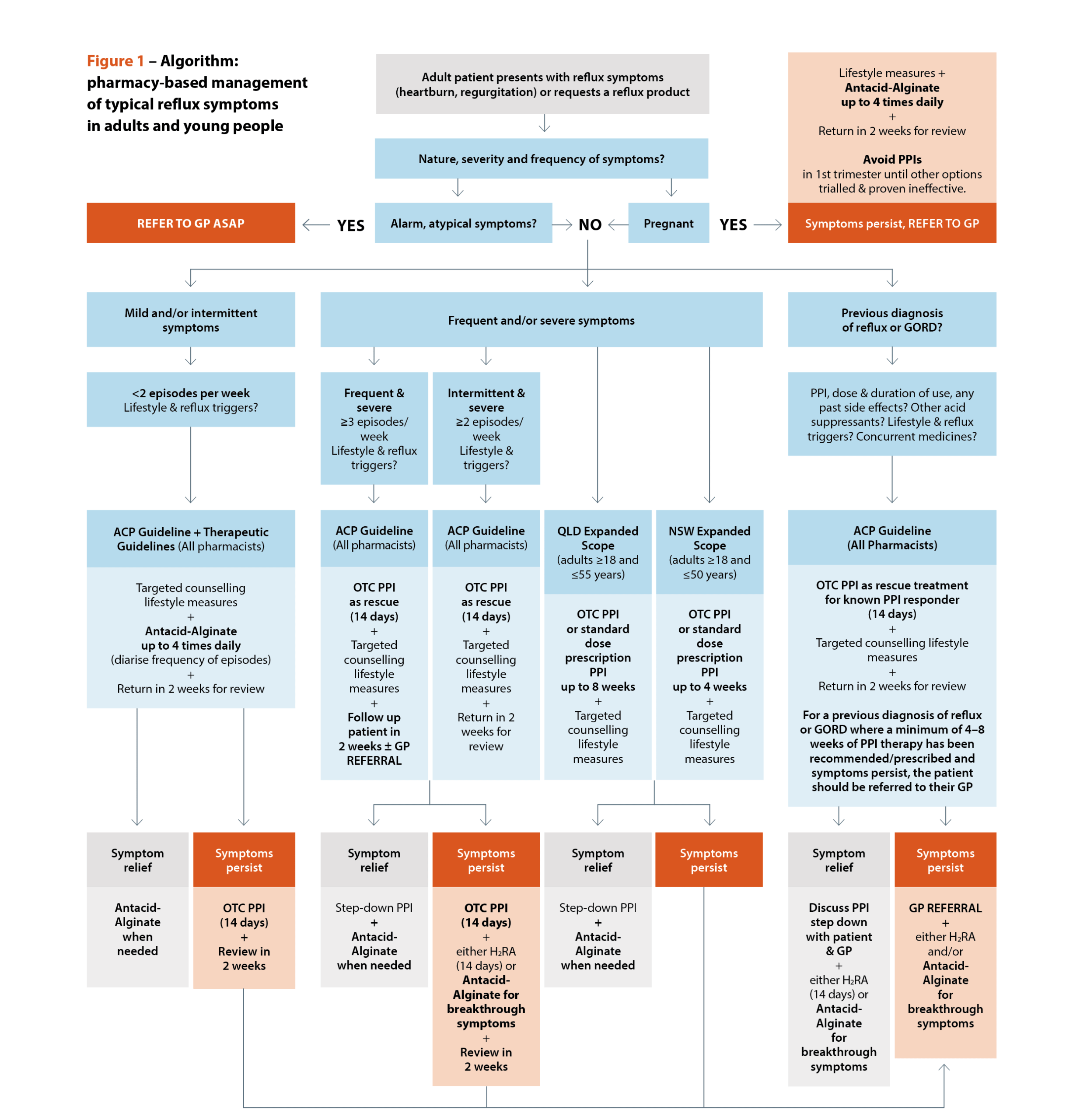 Sources: Australasian College of Pharmacy. Management of reflux: a guideline for pharmacists. Queensland Health. Queensland Community Pharmacy Gastro-oesophageal Reflux and Gastro-oesophageal Reflux Disease – Clinical Practice Guideline. NSW Health. NSW Pharmacist Practice Standards for gastro-oesophageal reflux and gastro-oesophageal reflux disease.[/caption]

 Dr Ming S Soh PhD, BPharm (Hons)[/caption]






 DR Amy Page (she/her) PhD, MClinPharm, GradDipBiostat, GCertHProfEd, GAICD, GStat, FSHPA, FPS is a consultant pharmacist, biostatistician, and the director of the Centre for Optimisation of Medicines at UWA’s School of Allied Health.[/caption]

 Hui Wen Quek (she/her) BPharm(Hons), GradCertAppPharmPrac is a pharmacist and PhD candidate at the University of Western Australia (UWA).[/caption]

 Gauri Godbole FPS[/caption]



A comparison of medicines information contained in GP referral letters with that elicited from Home Medicines Reviews (HMRs) has found discrepancies for 90% of patients, some posing serious risks.
In a small study led by Sue Carson MPS and published in the Journal of Pharmacy Practice and Research, researchers analysed the data of 60 patients in north Queensland, ranging in age from 55 to 92, with an average age of 73.6.¹
There were 833 medicines in the dataset, with patients taking between three and 24 medicines, with an average of 10.4 per patient.
A total of 247 discrepancies were found. The most common was a difference in dose (24.6%; n = 61), closely followed by not taking prescribed medicines (23.1%; n = 57).
Approximately one-fifth of discrepancies related to taking complementary therapies (n = 51), while taking prescription medicines that were not documented in the GP referral letter (17.4%; n = 43) and over-the-counter (OTC) medicines (14.2%; n = 35) were also common.
In total, more than one third of the patients were taking prescription medicines not documented in the referral letter.
Of the discrepancies, more than a quarter (55/247) were deemed to have had the potential to cause serious clinical consequences, with prescription medicines that were not documented in the referral letter associated with the greatest risk.
Discussing the study’s limitations, the researchers said the small sample prevented comparative statistical analyses, and the analysis was based upon HMRs by a single accredited pharmacist.
Researchers also examined the hypothetical costs for potential exacerbations, consequences and hospital admissions for four patients on a ‘worst-case’ scenario basis, finding potential costs of more than $10,000 per patient.
‘Pharmacists are trained to elicit accurate medication profiles which is a specialised skill often not developed to the same extent in other healthcare professionals,’¹ the researchers stated.
‘Optimal health requires the participation and expertise of many healthcare experts in collaboration with the consumer/patient, and electronic health records in Australia will require accurate medication profiles.
‘Accredited pharmacists have a responsibility to facilitate safe prescribing and optimise medication management.’
Other Australian studies have also found frequent discrepancies in referral letters. A 2005 NSW study investigating GP referral letters to specialist physicians found discrepancies in 42% of the referrals,² while 2014 research found discrepancies in over 80% of of GP referral letters for adult patients with type 2 diabetes who had been referred to a tertiary ambulatory clinic.³
References
1. Carson S, Kairuz T. A comparison of medication profiles held by general practitioners and those documented during home medication reviews. Journal of Pharmacy Practice and Research 2018; doi: 10.1002/jppr.1411.
2. Carney S. Medication accuracy and general practitioner referral letters. Intern Med J 2006;36(2):132–4.
3. Azzi M, Constantino M, Pont L, et al. Medication Safety: an audit of medication discrepancies in transferring type 2 diabetes mellitus (T2DM) patients from Australian primary care to tertiary ambulatory care. Int J Qual Health Care 2014;26(4):397-403.