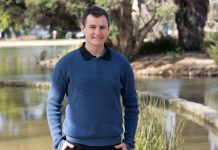



Krishna Nathwani MPS, PSA’s first Harm Reduction Champion, is advocating for better access to non-judgemental care.
What’s your background in harm reduction?
My passion for harm reduction came from my work with Community Care Chemist in Geelong. It was a service-focused model where we looked after our patients in more ways than just dispensing prescriptions, and I loved it.
Being in a management position, I had the opportunity to develop and design the service model based on the needs we identified. I thought it could improve people’s lives so much, and as a not-for-profit pharmacy organisation, we also had connections with emergency crisis organisations, such as food relief, homelessness services and domestic violence services.
I also embedded take-home naloxone (THN), and needle and syringe programs in all Community Care pharmacies. Entire teams were trained on their use, not just pharmacists. And when pharmacists in Victoria were able to provide long-acting injectable buprenorphine (LAIB) as a treatment for opioid dependence, I saw its potential to change patients’ lives.
I’ve had patients taking oral pharmacotherapy, who had to come into the pharmacy every day, telling me how challenging that could be. LAIB provided an opportunity to ease that burden.
Describe your start as the PSA Harm Reduction Champion.*
It’s been a whirlwind of making connections and finding ways to collaborate, including recently joining the Parliamentary Friends of Safe and Quality Use of Medicines event to discuss the importance of naloxone.
I’ve also spent time with nurse practitioners and attended a GP conference on addiction medicine, gaining a better understanding of how we can work together – from identifying issues at different levels of care to developing plans to tackle them. It’s been incredible learning about the challenges and possibilities – not just for pharmacists, but across the healthcare system.
Tell us about the impact of the harm reduction initiatives you’ve led.
For me, the LAIB program has been most impactful. I had a patient in the program who went on to reconnect with her daughter, buy a car for the first time and regain her driver’s licence.
A year after she had been my patient, she came in with her daughter, who was in her early 20s, for their flu shots. Her daughter said, ‘Thank you so much for what you’ve done for mum.’ They’ve bonded so well and now they’re accessing care for their whole family, so the impact goes beyond each individual patient.
We’ve also talked to patients who have been on hepatitis C treatment about our needle and syringe program, and many have since gone on to refer other people.
THN is another program that could be in every pharmacy, but isn’t. I’ve had a patient tell me they used their naloxone for a friend of a friend at a festival. It’s important to change people’s relationship with healthcare – so they come in and feel looked after. People should feel comfortable accessing holistic care that meets their needs. Harm reduction is fundamentally non-judgemental; we’re trying to make things as safe as possible for people.
What do you hope to achieve in this role?
I’d like to see improved access to services for rural communities, as well as policy reform to ensure consistency across jurisdictions. More harm reduction education should also be built into pharmacy degrees, alongside concepts such as trauma-informed and stigma-
free care.
Importantly, we need a better understanding of the barriers to harm reduction services. I know some patients and practitioners are worried about seeking or providing care because they’ve had negative experiences. But I’ve found harm reduction services to be some of the most rewarding work in my practice. A well-planned and considered approach, with clear expectations from the beginning and a non-judgemental environment, has been key to that.
I hope to share these learnings and hear from others across the broader pharmacy profession.
Day in the life of Krishna Nathwani MPS, PSA Harm Reduction Champion, Geelong, VIC
| 9:00am | Backing regional pharmacists
Mentor pharmacists in regional Victoria as part of the Enhancing Pharmacist Involvement in Care in Medically Assisted Treatment for Opioid Dependence program – a collaborative care pharmacotherapy model. I support pharmacists as they train and deliver the expanded scope pharmacotherapy program, in collaboration with prescribers. |
| 12:00pm | Working towards shared solutions
Join policy reform discussions about the future of opioid dependence treatment. These discussions bring colleagues from different disciplines and people with lived experience together to explore shared challenges and align priorities. I contribute a community pharmacy perspective, drawing on both clinical practice and operational experience to consider how proposed changes could work for patients and the teams supporting them. |
| 2:00pm | Bringing practice into advocacy
Contribute to stakeholder meetings, discussing pharmacist education and providing input into research. This includes ideas for a national pharmacist survey that could better capture stigma, confidence and operational barriers to providing harm reduction services. The aim is to understand what would make it easier for a pharmacy team to turn an intention to help into a sustainable service. |
| 4:30pm | Making education practical
Develop social media content for pharmacists, exploring topics such as naloxone access, trauma-informed care and the language we use when discussing dependence. I want the learning to translate into something useful at the next patient interaction: a more thoughtful question, a clearer explanation or language that helps someone feel comfortable returning for care. |
| 7:30pm | Learning and recharging
Some evenings go to my pharmacist prescribing studies; on others, I’ll have my nose in a book. With plenty of travel at the moment, I also make time to explore wherever I am, especially if there’s a stretch |