



Case scenario
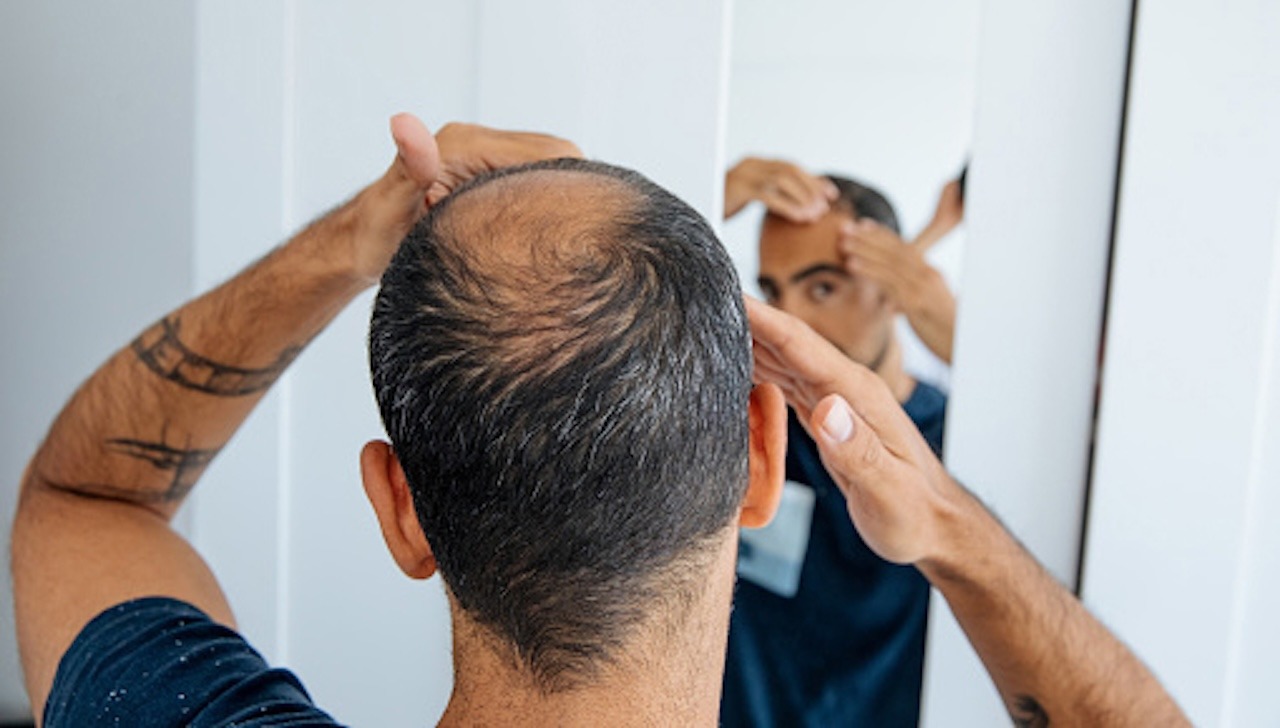
Greg, a 28-year-old man, comes into your pharmacy asking for a ‘strong minoxidil hair product’. He explains that his doctor recently diagnosed him with male pattern hair loss and suggested he try an over-the-counter treatment, with a follow-up review in 6 months. Greg has noticed gradual thinning at the temples over the past year but reports no sudden hair loss, scalp irritation or other medical issues. He has no known allergies, takes no medicines and has no chronic conditions.
Learning objectivesAfter reading this article, pharmacists should be able to:
Competency standards (2016) addressed: 1.1, 1.4, 1.5, 2.2, 3.1, 3.5 Accreditation number: CAP2602DMFK Accreditation expiry: 31/01/2029 |
Already read the CPD in the journal? Scroll to the bottom to SUBMIT ANSWERS.
Introduction
Hair is closely linked to appearance and identity, and changes to it often carry strong emotional significance. Hair loss can therefore have a major impact on self-esteem and quality of life, with notable psychosocial consequences.1,2 In an era where many people increasingly turn to social media for health information,3 pharmacists are accessible, reliable health professionals who can guide patients towards safe, evidence-based options, clarify treatment outcomes and timelines, and identify when medical referral is required.
Epidemiology and physiology
Pattern hair loss, also called androgenetic alopecia, is the most common cause of hair loss in both men and women.2 Approximately 80% of Caucasian men and up to 60% of Caucasian women by the age of 70 years are affected by pattern hair loss.1
Scalp hair follicles cycle through three stages: anagen (active growth), catagen (transition), and telogen (resting/shedding).1 At any given time, most follicles (about 85–90%) are in the growth phase, producing roughly 1 centimetre of hair per month.1 Shedding up to 100 hairs daily is considered normal, usually seen while washing and brushing.1
Understanding hair loss disorders
Hair loss disorders typically result from disruptions in the normal hair growth cycle.1 They can be divided into three main categories: patterned, diffuse or localised (patchy) alopecia.1
Patterned alopecia
Male or female pattern hair loss is a non-scarring form of alopecia. It manifests as progressive hair thinning in a characteristic pattern and is influenced by genetics and the sensitivity of hair follicles to androgens, primarily dihydrotestosterone. The replacement of terminal hairs with shorter, finer, miniaturised hairs is driven by androgen effects on scalp follicles.1,2
In men, pattern hair loss typically begins with bitemporal hairline recession and may progress to baldness at the vertex (crown).2 In women, it usually presents as diffuse thinning that gradually widens the part line on the crown and reduces ponytail volume.2 Both male and female pattern hair loss commonly comprise of a sparser frontal hairline where episodic bursts of excessive hair shedding are common.1,2
Diffuse alopecia
Diffuse alopecia involves hair loss across the scalp without a defined pattern. It can occur during either the telogen or anagen phases of the hair cycle. The most common cause is telogen effluvium, a reactive condition in which a trigger causes anagen hairs to prematurely enter the telogen (resting) phase, resulting in excessive shedding.1,4 Both acute and chronic telogen effluvium typically do not lead to permanent baldness.1
Localised (patchy) alopecia
Localised alopecia presents as discrete patches of hair loss. Common causes include alopecia areata and tinea capitis (more common in children), while less common causes include scarring alopecias (e.g. discoid lupus erythematosus or lichen planopilaris) and trichotillomania (compulsive hair-pulling).1
Alopecia areata is a complex polygenic autoimmune disorder and typically produces discrete (often circular) areas of hair loss anywhere on the body.1 The lifetime risk is approximately 2%,5 and spontaneous complete regrowth within 12 months occurs in up to 80% of individuals with a single patch, though relapses are common.1 Alopecia areata can have significant psychosocial impacts. The Australia Alopecia Areata Foundation (AAAF) offers resources and support for affected individuals and their families.1
Diagnosis and treatment goals
When a person presents with hair loss, it is important to first confirm the diagnosis and rule out reversible or more serious causes. Medical practitioners may consider contributing factors such as scarring alopecias, nutritional deficiencies, metabolic disorders or drug-induced alopecia. Some implicated medicines in drug-induced alopecia include, but are not limited to, chemotherapy, retinoids, antiepileptics, antidepressants, β-blockers, statins and hormonal agents such as anabolic steroids, testosterone and oral contraceptives.1,2,6
Once pattern hair loss is diagnosed, treatment is generally pursued only if the person wishes to address cosmetic concerns or psychosocial impacts.1 Management aims to slow progression and stimulate regrowth where possible. Emotional and social support should be addressed in their care,1 alongside referral to the medical practitioner when diagnosis is uncertain or comorbidities need management.
Non-pharmacological management
Non-pharmacological approaches can improve appearance, protect scalp health and complement medical therapy.
Cosmetic camouflage1,2,7
These strategies aim to conceal thinning and improve appearance:
- Creative hair styling (e.g. layering, parting adjustments)
- Cosmetic camouflage products such as keratin fibres or coloured sprays.
Scalp and hair health1,2,7
These measures focus on preventing further damage and protecting the scalp:
- Gentle hair care practices (air-drying or cool hairdryer setting, minimising chemical treatments, loose hairstyles to prevent traction injury)
- Sun protection with a broad-brimmed hat, scarf or sunscreen.
Procedural interventions1,2,5
These attempt to restore hair density but vary in accessibility and evidence:
- Hair transplantation can provide permanent restoration, particularly when combined with medical therapy, although cost and access are significant barriers
- Platelet-rich plasma (PRP) injection uses autologous blood to stimulate growth but is unregulated in Australia; patients considering
PRP should consult clinicians experienced in evidence-based alopecia medical management - Evidence for other interventions (e.g. laser devices, hair tonics, nutritional supplements) is limited.
Pharmacological management
For mild to moderate pattern hair loss, treatment options differ by sex. In males, topical minoxidil or oral finasteride may be used either alone or in combination.1 In females, topical minoxidil or oral spironolactone are commonly prescribed as monotherapy or in combination.1 In more severe cases, combination therapy is generally recommended.1
Before starting therapy, pharmacists should assess for contraindications, precautions and potential adverse effects. Counselling on realistic expectations is essential, as in most cases treatments are not curative but aim to slow progression and promote regrowth.1,2,8 Visible improvement is gradual; topical minoxidil may take 3–6 months while oral finasteride and spironolactone often require 6–12 months.1 Continuous therapy is necessary to maintain benefit, which is usually lost within 6–12 months of treatment cessation.8
Topical minoxidil is Pharmacy Only (Schedule 2) and is available as a foam or lotion.1 The foam is often preferred as it doesn’t contain propylene glycol that can irritate the scalp, is less likely to cause allergic contact dermatitis, and is less greasy than the lotion.1,2
Pre-existing scalp conditions such as eczema, seborrhoeic dermatitis or dandruff should be treated prior to initiating minoxidil, as they may be exacerbated by therapy.1 A temporary increase in hair loss may be seen during the first months of minoxidil therapy; this reactive shedding usually settles after a few weeks. Additionally, minoxidil should only be applied to affected areas, carefully avoiding skin around the forehead and temples to reduce the risk of hypertrichosis (excessive hair growth).1,8
Knowledge to practice
Pharmacists can help people manage hair loss by understanding its various forms, acknowledging the social and cultural importance of hair, and recognising the anxiety it may cause.1 Prior to recommending treatment, pharmacists should screen for red flags and contraindications, making sure they refer patients to their doctor when appropriate.2
Many hair loss treatments require time and continuous application. Pharmacists play an important role in educating patients about realistic expectations and the likely timelines for treatment response, helping them make informed decisions.1 Pharmacists can also discuss non-pharmacological strategies such as healthy hair care practices, creative hair styling, cosmetic camouflage and sun protection, to support patients’ overall wellbeing.2
Conclusion
As frontline healthcare professionals, pharmacists play a vital role in supporting people with hair loss disorders. They can facilitate appropriate medical referrals, provide evidence-based information, and guide patients in the safe and effective use of available treatments and supportive strategies.
Case scenario continuedAfter reviewing Greg’s history, you confirm there are no contraindications to minoxidil therapy. You explain the correct use of an over-the-counter foam formulation: applying to a dry scalp, taking care around the forehead and temples, waiting at least 1 hour before using other products and avoiding washing for 4 hours after application. You discuss the treatment timeline, reassuring Greg that initial shedding may increase but usually settles, and that it can take 3–4 months of consistent use before improvement is noticeable. |
This article is accredited for group 2 CPD credits. Click submit answers to complete the quiz and automatically record CPD against your record.
If you do get an enrolment error, please click here
Key points
- Hair follicles cycle through three main stages of hair growth: anagen, catagen and telogen.1
- Encourage people experiencing hair loss to see their medical practitioner for diagnosis to exclude scarring alopecias, correct underlying nutritional or metabolic deficiencies, and manage concurrent conditions.1,2
- Hair loss can have significant psychosocial consequences; appropriate social and emotional support is important.1
- Counsel patients on the potential benefits, risks and regimens of available therapies to support informed decision-making and realistic expectations.1
References
-
- Dermatology Expert Group. Dermatology. Melbourne: Therapeutic Guidelines; 2022 (Amended July 2024).
- Lyengar L, Li J. Male and female pattern hair loss. Aust Prescr 2025;48:93–7.
- Gupta AK, Faour S, Wang T, et al. Pattern hair loss and health care professionals: How well are we connecting with our audience? J Cosmet Dermatol 2024 Sep;23(9):2779-2784. Epub 2024 Apr 26.
- Dr Harriet Bell. Diffuse Alopecia. 2019. At: https://dermnetnz.org/topics/diffuse-alopecia
- Hon A/Prof Amanda Oakley, Dermatologist, 1997; Updated: Dr Harriet Bell, Medical Registrar, New Zealand, May 2022. Minor update by Ian Coulson, Dermatologist. Alopecia areata. 2024. At: https://dermnetnz.org/topics/alopecia-areata
- Dr Delwyn Dyall-Smith FACD, Dermatologist, 2009. Alopecia from drugs. At: https://dermnetnz.org/topics/alopecia-from-drugs#
- Honorary Associate Professor Amanda Oakley, Dermatologist, Hamilton, New Zealand, 1998. Further updates: December 2015 and May 2023. Hair loss. At: https://dermnetnz.org/topics/hair-loss
- Australian Medicines Handbook. January 2025. At: https://amhonline.amh.net.au
Our author
Frieda Kaleel (she/her) BPharm, GradDipHospPharm, CredPharm, MPS is a credentialled pharmacist with over 20 years of experience in a range of pharmacy settings, including community, hospital, medicines reviews and university.
Our reviewer
Hana Numan (she/her) BPharm (NZ), PGDipClinPharm (NZ), MPS (NZ)


Genevieve Adamo MPS (Image: Steve Christo Photography)[/caption]


Deborah Williams at the Chemist Warehouse Australian Open pop-up pharmacy[/caption]