






Most pharmacists will be aware of well-publicised research in recent years that shingles vaccination may reduce dementia risk. But is this just the tip of the iceberg when it comes to vaccination reducing the risk of non-infectious diseases?
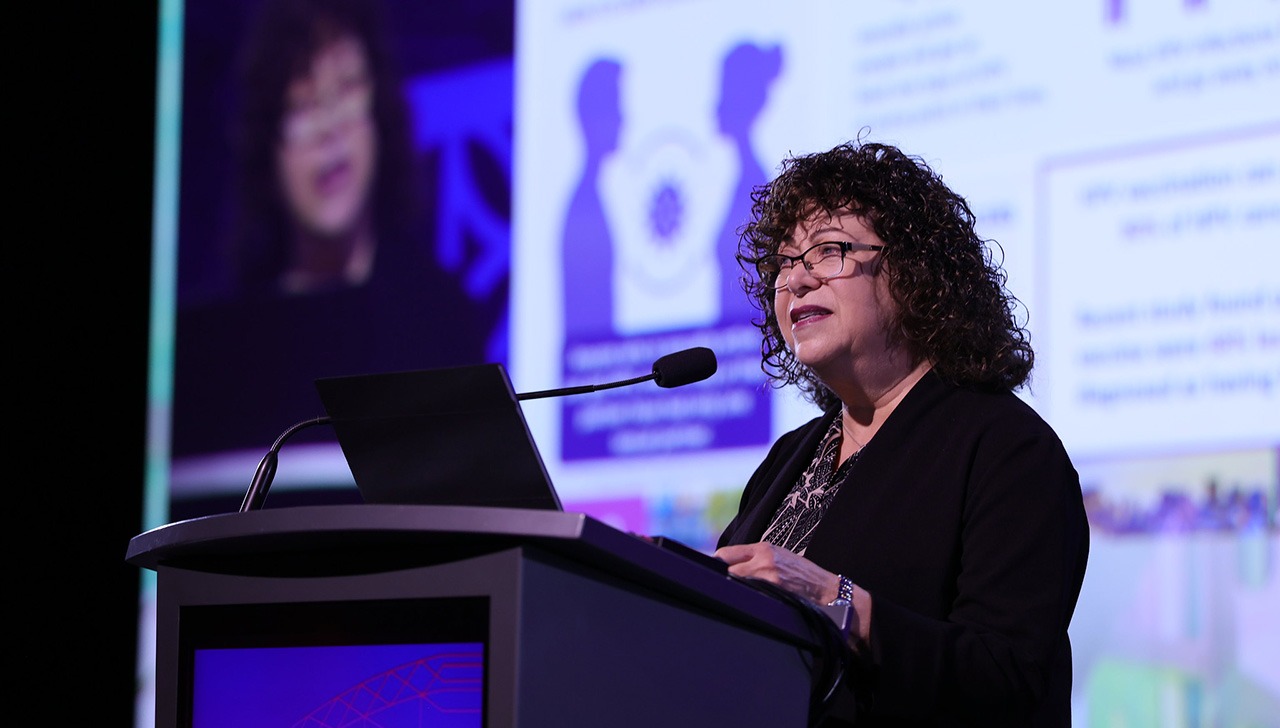
According to Dr Lisa Coonin of the Task Force for Global Health, the more we learn about vaccination, the more protective benefits it seems to offer. She laid out the current evidence in the opening plenary of the 84th FIP Congress in Montreal on Monday 31 August 2026.
Multiple vaccines may reduce dementia risk
The data presented regarding the potential protective effects of vaccination against dementia were very promising.
‘[There is] emerging evidence that vaccination of many types of vaccines may be associated with lower dementia risk. Pneumococcal vaccine, Shingrix [shingles vaccine], high-dose flu, and dTPa are all found to have a lower risk of dementia and Alzheimer’s disease,’ Dr Coonin said.
There are multiple studies which support this optimism, finding associations between:
- pneumococcal vaccination with a 36% lower risk of Alzheimer’s disease
- herpes zoster vaccination with a 24% lower risk of dementia, 47% lower risk of Alzheimer’s disease, and slower progression of dementia
- dTpa vaccination with a 33% lower risk of any dementia.
Shingles vaccine may reduce risk of cardiovascular disease
A recently published United States observational study suggested the recombinant shingles vaccination may be associated with a lower risk of cardiovascular events when compared with the live attenuated vaccine.
Over a 7-year period, adults aged ≥60 years who received recombinant shingles vaccine had:
- 10% lower burden of ischaemic heart disease
- 10% lower burden of heart failure
- 12% lower burden of ischaemic stroke in men.
HPV vaccination protects against warts and is linked to a lower risk of head and neck cancers too
Vaccination against human papillomavirus (HPV) is recognised as preventing more than 90% of HPV cancers and warts – most notably cervical cancer.
But a recent study found people who had the HPV vaccine were also 68% less likely to be diagnosed as having head or neck cancer.
Dr Coonin said the implications of this are significant: ‘these vaccines have important impacts in the further development of non-communicable diseases (NCDs)’.
Correlation or causation?
We don’t fully know yet. But Dr Coonin thinks there is good reason for optimism:
‘These are very promising signals. They’re observational studies, and more research is needed. But we are very hopeful that vaccines will have this effect,’ she said.
‘Vaccination is not only about preventing infection. It is an investment in preventing NCDs and improving outcomes across the life course. Pharmacists can help make that promise a reality.’
And vaccination could increasingly be considered an oncology treatment modality, with Dr Coonin highlighting recent developments where ‘there may be the pathway for a cancer vaccine that’s personalised to the person’s tumour’.