

 Ruth Nona[/caption]
 Kate Gunthorpe MPS[/caption]
 Madison Low[/caption]

 References: Therapeutic Guidelines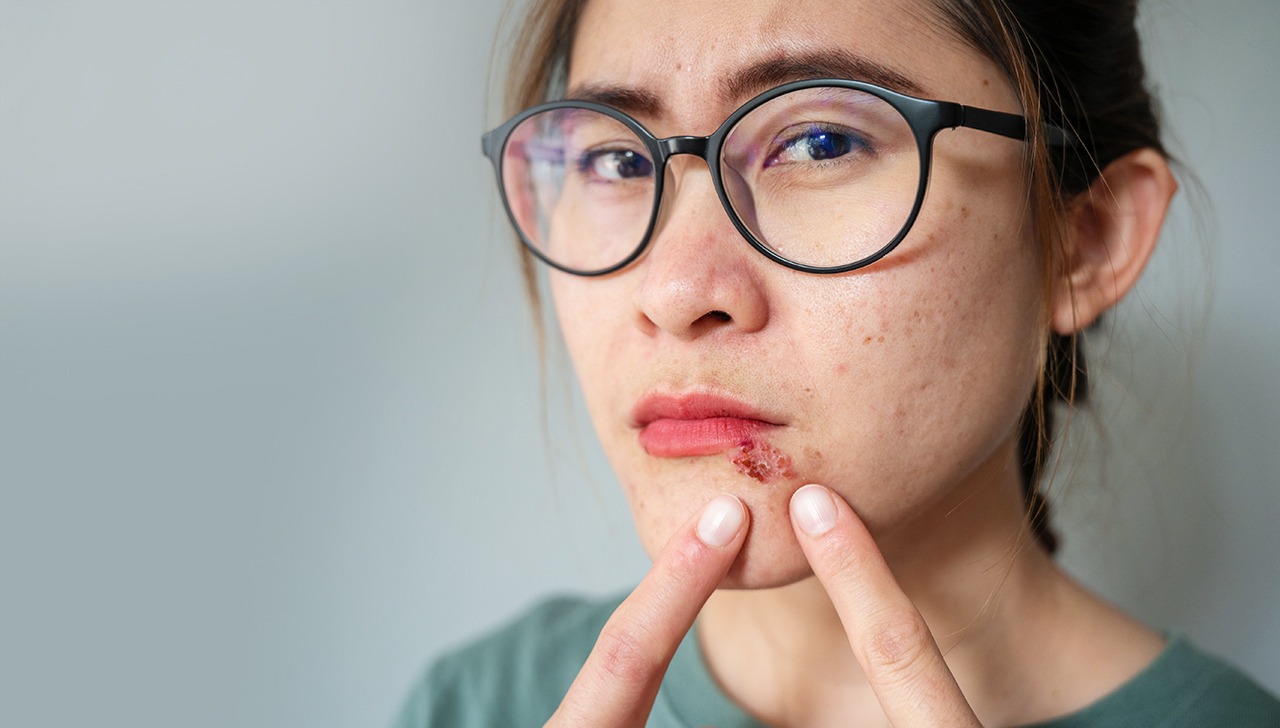
Case scenario
You are working in a community pharmacy when Jonah, a 28-year-old male, approaches you asking for something to treat his painful lip. He says he began experiencing tingling and itching on his lip one day ago. He reports having had cold sores several times before, usually once or twice per year, but this episode feels worse. You ask about his lifestyle, and he tells you he has been particularly busy at work lately. He asks about the available treatment options and inquires if anything stronger than a cream can be used. He is not on any regular medicines. He appears embarrassed about the cold sore and tells you he has a work presentation in 2 days.
Learning objectivesAfter reading this article, pharmacists should be able to:
Competency standards (2016) addressed: 1.1, 1.4, 1.5, 2.2, 3.1, 3.5 Accreditation number: CAP2512DMAP Accreditation expiry: 30/11/2028 |
Already read the CPD in the journal? Scroll to the bottom to SUBMIT ANSWERS.
Introduction
Herpes simplex virus type 1 (HSV-1) is a highly prevalent virus that causes recurrent mucocutaneous lesions, most commonly herpes labialis, also known as cold sores.1 Lesions typically affect the lip border but may involve intraoral tissues, genital mucosa, skin and eyes, or may rarely cause complications such as encephalitis or pneumonitis.2 After childhood acquisition via close contact, HSV-1 becomes latent in sensory ganglia, usually
THIS IS A CPD ARTICLE. YOU NEED TO BE A PSA MEMBER AND LOGGED IN TO READ MORE.