







Holiday crowds bring unique clinical challenges, testing pharmacists’ problem-solving skills from sun exposure injuries to urgent medicine gaps.
In many metropolitan areas, January is a lull period for pharmacists – as city dwellers head out of town to beat the heat and reset for the year ahead. But not so in many regional beachside areas, with pharmacies experiencing a steady uptick in visiting clientele, as Rebecca Davies, who works as a community pharmacist in Cotton Tree on Queensland’s Sunshine Coast, would attest.
‘Where I’m working at the moment is right on the beach, so it’s literally busy all the time,’ said Ms Davies, who was formerly based in Mona Vale on Sydney’s Northern Beaches. ‘I wouldn’t say there’s ever a quiet time, as in the winter, we still get people coming up from the southern states for holidays.’
With a caravan park stationed down the road, nearby units that are typically rented out during peak holiday periods and warm weather year-round, it’s a matter of balancing the holiday trade that’s passing through with regular customers.
A clinical mix by the sea
Alongside routine dispensing and chronic disease management for locals, managing beach-related enquiries and conditions is a part of everyday practice.
Over-the-counter demand increases during holiday periods, with visitors seeking sunscreens, beach equipment and first-aid items, with many presentations requiring pharmacist oversight.
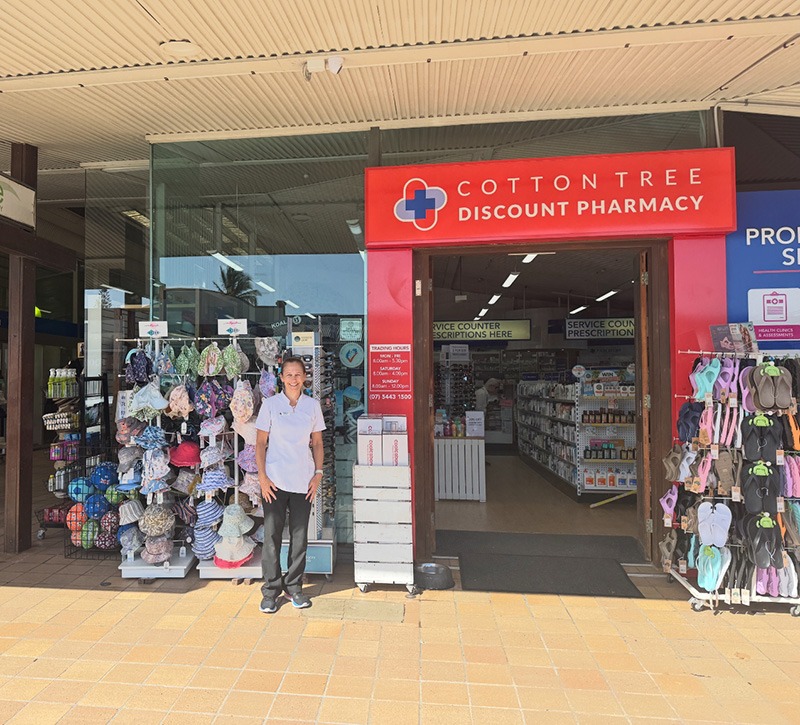
‘You get people that aren’t used to the sun that come in with sunburn,’ Ms Davies said.
Children feature prominently, particularly those visiting from interstate or overseas – presenting with significant sunburn, dehydration or injuries sustained during outdoor play.
‘The kids that come from places that aren’t used to the beaches come in with the sunburn,’ she said. ‘Then there are the holiday kids [who’ve fallen off] bikes or skateboards.’
In one recent case, a teenage girl presented with extensive sunburn that had initially been treated in the pharmacy. Several days later, she returned with worsening symptoms.
‘She came back about 5 days later and it looked like she’d picked up a bacterial infection from broken skin.’
At that point, Ms Davies referred the patient to a doctor, recognising that pharmacy management was no longer sufficient. ‘It had just gone too far for anything that we could do for her.’
Marine-related skin reactions are another frequent presentation, particularly sea lice, which can ‘get caught in between the swimmers and their skin’.
Management usually involves antihistamines, topical corticosteroids and practical advice to reduce symptoms.
‘You tell them to keep the area cool,’ Ms Davies said. ‘Anything that makes them hotter will make it worse.’
In most cases, these conditions can be managed entirely in-store, allowing patients to avoid medical appointments during short stays.
‘But there’s a lot of regular customers and we still have all the Webster-paks among other things to manage,’ she said.
Managing forgotten medicines
Beyond acute injuries and skin conditions, medicine continuity for holidaymakers is one of the most complex challenges Ms Davies faces.
Tourists frequently arrive without sufficient medicine supply, having forgotten it at home or miscalculating how long they would be away.
‘it’s quite satisfying to help someone who is on their holidays by keeping it running smoothly and taking the stress out of it.’
rebecca davies
‘If the customer has a regular pharmacy at home, we can contact that pharmacy,’ she said. ‘They can fax scripts and post the originals.’
Electronic prescriptions have made this process significantly easier.
‘With eScripts, it’s really easy to sign them up to the Active Script List and have access to all their eScripts online,’ Ms Davies said.
However, not all situations are quickly resolved.
‘I had one customer the other day who’d left her medicine at home and didn’t have a script,’ she said.
The medicine was venlafaxine, which should not be stopped abruptly.
In this particular situation, the best course of action was for the patient to arrange an urgent medical consultation with their regular GP, or via an online telehealth provider if necessary.
‘I encourage people to stay with their regular doctor. But there are times when those services are very useful.’
Managing medicines for visiting patients often requires Ms Davies to look beyond her own dispensary.
‘If we don’t have the medication and it’s for someone passing through, ordering it in isn’t always a possibility, because the person might move on before it comes in,’ she said.
‘So we’ll ring the other pharmacies around to see if they’ve got it and direct the patient there. It’s just about trying to source the medication for the patient before they move on.’
Expanded scope makes a difference on holiday
Expanded scope of practice services have proven particularly valuable in a tourist-heavy setting, especially pharmacist-led treatment for uncomplicated urinary tract infections (UTIs).
‘Patients with symptoms of a UTI who have come here for the weekend can come into the pharmacy quite distressed,’ Ms Davies said. ‘The symptoms of the infection really disrupt how they get through the day and they’re not familiar with the area or the doctors.’
Being able to assess and treat eligible patients in the pharmacy can significantly reduce discomfort and disruption.
‘It definitely puts them at ease when we go through that, that list of when we can and can’t supply,’ Ms Davies said. ‘We can say, “Yes, we can help you”.’
For visitors, the impact is immediate.
‘They’re not wasting 24 to 48 hours trying to figure out where to go,’ she said. ‘It makes a big difference to their holiday.’
According to Ms Davies, community awareness of pharmacist UTI services has increased, with many patients now presenting specifically requesting assessment rather than symptom-only treatments.
‘More people come in already knowing that the service exists rather than asking for Ural,’ she said.
Staffing for constant demand
Maintaining service quality during sustained busy periods requires careful staff management.
‘Sometimes the owner puts more staff on over the holiday period. Because obviously there’s going to be an influx of tourists, there’s a couple of extra staff we can call on,’ Ms Davies said.
‘The business also supports private clinics, so we have access to extra staff we can call on during the day if things start to back up.’
The pharmacy relies on a mix of permanent staff, casual pharmacists, students and graduates to manage peaks. Having experienced casual staff who can be called in at short notice is particularly valuable.
‘We’re lucky to have someone we can call on who used to be a permanent employee and now works casually,’ she said.
Despite the intensity, Ms Davies finds the work highly rewarding.
‘It definitely tests your knowledge on how to navigate certain situations,’ she said. ‘And it’s quite satisfying to help someone who is on their holidays by keeping it running smoothly and taking the stress out of it.’
For pharmacists considering a move to a coastal area, Rebecca sees beachside practice as challenging but professionally enriching.
‘It offers lots of different scenarios for helping patients compared to your regular customer coming in with the same things from month to month,’ she said. ‘And there’s lots of opportunities for problem-solving.’
Help patients avoid serious sunburn by completing the AP CPD: Sun safety, don’t feel the burn.
Image licensed under Creative Commons.