






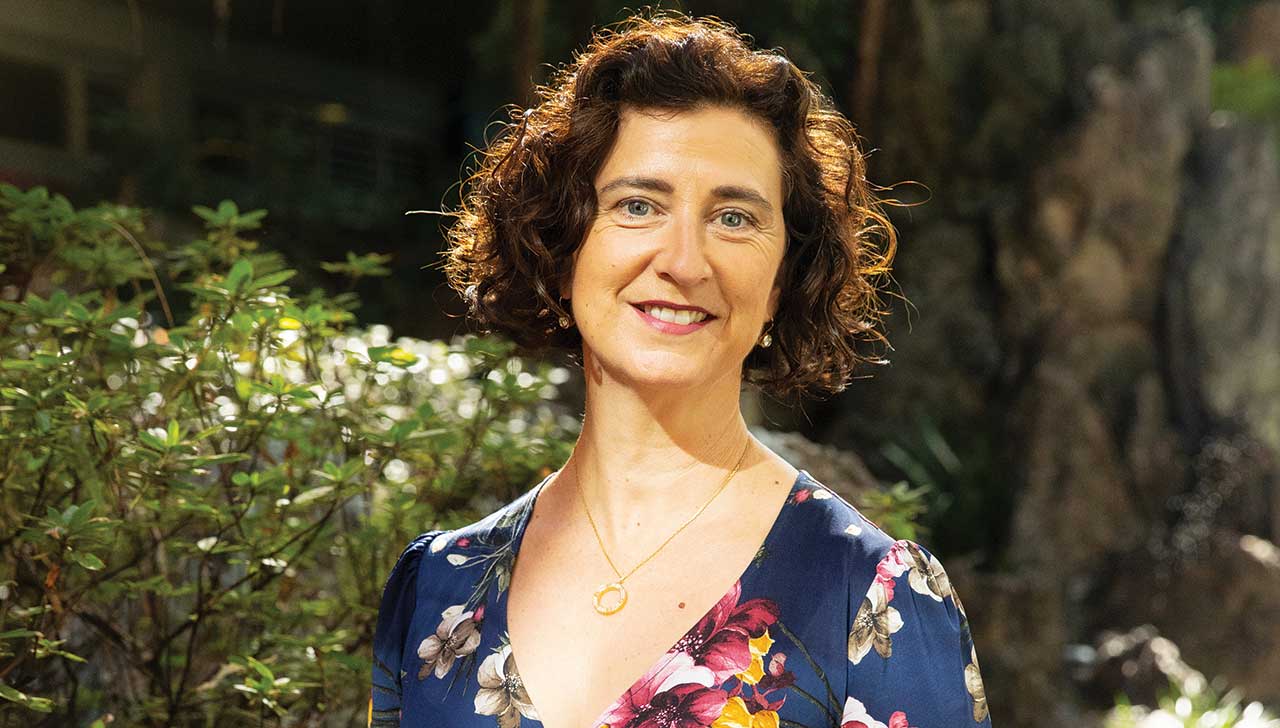
Genevieve Adamo MPS did not set out to work in poisons information. After beginning her career in community pharmacy as an assistant pharmacist and progressing into management, Ms Adamo joined the New South Wales Poisons Information Centre in 2004.
‘I sort of fell into poisons,’ she said. ‘After having a few children, I had some time off and wanted to do something where I was learning again.’
Each call is different, providing a continuous learning opportunity, said Ms Adamo, who took on a role with the National Poisons Register in 2023.
‘You don’t know what you’re going to get at the end of the phone when you pick it up,’ she added.
Because so many of the calls to the poisons centre related to medicines poisoning, whether overdoses or errors, being a pharmacist is a distinct advantage.
‘We have really extensive knowledge of the drugs, as well as a really good base in physiology and pharmacology,’ Ms Adamo said.
Here, she outlines what’s needed to enter and flourish in the space, as told to delegates at PSA’s Voices of Pharmacy – Passion, Purpose and Possibility webinar, held on 26 November 2025.
Core skills for poisons information practice
Poisons information demands a distinct skill set, combining deep scientific knowledge with the ability to work confidently under pressure. Calls are often urgent, information may be incomplete and decisions must be made quickly.
‘Every call provides a clinical problem that you’ve got to solve. Many of which there’s no clear answer,’ Ms Adamo said. ‘And we can’t always look something up in a reference [because] not everything is listed there.’
Because it’s neither ethical nor feasible to conduct controlled trials in poisoning, evidence gaps are common.
‘We can’t go and poison a whole lot of people to create clinical trials to find the answers for poisoning questions. We have to wait until these situations happen and then turn those into research themselves,’ she said. ‘So because of that, we often have to go back to basics, and use those pharmacology principles we learned way back in uni.’
This includes:
- thinking about what chemical the patient has been exposed to and how it will impact normal physiology
- what response the body could have
- how the potential risks can be minimised.
Equally important is the ability to tolerate, or even be ‘excited by’, uncertainty.
‘If you’re somebody who gets terrified by the fact that you can’t find an answer, this is not the job for you,’ Ms Adamo said. ‘There’s a lot of unknown … That’s what makes it challenging and interesting.’
While communication skills are important for all pharmacists, they are particularly pertinent in poisons information. Because advice is delivered remotely, pharmacists must rely entirely on what they hear over the phone.
‘We don’t see the patients, we’re only hearing them,’ she said. ‘So we must be really good at listening and at receptive communication.’
Calls often begin with anxiety rather than a clear clinical question. So allowing callers to fully explain the event is central to safe and effective care.
‘I’ll often start a call by saying, “Just tell me what happened,” and listen until they finish talking,’ she said. ‘That helps them feel heard and validated, and then they’re more likely to listen to the advice I give.’
The pace of work adds further pressure. Average call times are short, requiring pharmacists to rapidly gather information, consult resources where possible and provide clear guidance.
‘You’ve got to get all the history, work out what you know, look things up and provide advice all within about 5 minutes,’ Ms Adamo said.
Building the right foundation
Because poisons information pharmacy has no formal training pathway, pharmacists interested in the field should build relevant knowledge and exposure well before applying.
‘What we would look for would be a minimum of 3 years experience as a pharmacist, and ideally a combination of community and hospital pharmacy,’ Ms Adamo said. ‘Community brings a lot of skills in communication and history taking, but [the role] is very clinical, so having that hospital knowledge is also important.’
One of the most important resources is Therapeutic Guidelines, which supports much of the clinical advice provided by poisons centres.
‘There’s a Therapeutic Guideline for toxicology and toxinology,’ she said. ‘We use that a lot, so having a good understanding of it is really beneficial.’
With many calls related to exposures that occur in domestic settings, familiarity with over-the-counter products and household chemicals is also essential.
‘I often tell new staff to go and check out the cleaning aisle,’ Ms Adamo said. ‘It’s really hard to give advice on household poisons if you don’t know what any of them are.’
From individual cases to national policy
While providing advice over the phone is the most visible aspect of poisons information, there’s much more to the role.
Poisons centres play a critical role in generating real-world evidence, with calls providing a continuous stream of data that can be analysed to identify new risks or changing patterns of exposure.
‘You’ve got to get all the history, work out what you know, look things up and provide advice all within about 5 minutes.’
Genevieve Adamo MPS
‘We all have the ability to be involved in research, because we’re recruiting patients through our calls,’ Ms Adamo said. ‘Our staff also create new guidelines for education and training, supporting both external poisoning prevention initiatives and the ongoing training of new and existing staff.’
Another major function is toxicovigilance – the systematic monitoring of poisoning trends with a focus on prevention and risk reduction.
‘That can involve all sorts of things [including] media and education,’ she said. ‘There’s often a lot of number crunching as well, and then working with regulators to change the laws to restrict access, because we know that one of the best ways to minimise harm and exposures is to restrict access.’
A key scheduling change Ms Adamo and her team were involved in was the changes to paracetamol regulations that were ushered in early last year.
‘We were contracted by the TGA to collect extra information about all the paracetamol calls we got,’ Ms Adamo said. ‘Paracetamol calls are the most common call to the poison centre every year, and all of that information was collated by our Head of Research and our consultant toxicologists – with the report used as the basis for the proposed scheduling changes that occurred.’
Sometimes individual cases can lead to broader system change.
‘I was involved in a case with a mum whose little one got really sick, and it was eventually worked out that it was a chronic choline salicylate toxicity,’ she said. ‘She couldn’t believe she’d been giving this poison to her kid and didn’t realise it was poisonous, because she bought it from [a supermarket] and thought it must be safe.’
In response, Adamo submitted an application to reschedule choline salicylate to Schedule 2.
‘Now it has to have more labelling, and it can only be available in a pharmacy,’ she said. ‘Those are the really interesting and rewarding aspects of poisoning work.’
For pharmacists considering the field, Ms Adamo believes the appeal lies in its tangible public health impact – shaping national safety standards and preventing future harm, particularly among children.
‘You know the work you’re doing actually changes outcomes.’
Read PSA’s Medicine Safety: Child and adolescent care report to understand the key poisoning risks and how pharmacists can help mitigate them.