







New advice from the Therapeutic Guidelines highlights that tirzepatide (Mounjaro) could interfere with the efficacy of oral contraceptives. And initiating the medicine and/or increasing its dose are specifically precarious.
AP spoke with Dr Sue Shanley, the editor of the Therapeutic Guidelines Sexual and Reproductive Health guidelines, to understand how this could impact patients and what counselling advice pharmacists should provide.
How does tirzepatide affect the efficacy of oral contraceptives?
Tirzepatide, a dual GIP/GLP-1 RA, reduces the bioavailability of oral contraceptive pills, Dr Shanley said.
‘The mechanism is thought to be delayed gastric emptying,’ she said. But singular GLP-1 RAs, such as semaglutide or dulaglutide, have not demonstrated the same effect on bioavailability.
‘So the additional contraceptive precautions recommended for tirzepatide have not been applied to those drugs.’
Dr Shanley also told AP that vomiting or diarrhoea, common side effects of tirzepatide, could make any oral contraception taken within 3 hours less effective. ‘Patients should [then] be directed to follow their missed pill guidance,’ Dr Shanley said.
What are the contraceptive options?
Patients taking tirzepatide are now being advised to consider switching to non-oral contraceptives, or add a barrier method.
‘For patients considering a change, the most effective reversible methods, long-acting reversible contraceptives (LARCs), are copper or levonorgestrel-releasing IUDs and the etonogestrel implant,’ Dr Shanley said. ‘Very effective non-oral methods that may also be considered include the depot medroxyprogesterone acetate (DMPA) injection and the contraceptive vaginal ring.’
If a patient wishes to switch contraceptive methods, pharmacists can support a referral by contacting their GP, sexual health clinic, or another contraceptive provider – noting that the patient is starting or increasing their tirzepatide dose and would like to discuss a non-oral contraceptive option, Dr Shanley said.
‘If permanent contraception is preferred, vasectomy and tubal ligation can also be considered in the longer term.’
What if patients want to continue using their OCP?
Should a patient using an oral contraceptive prefer not to switch contraceptive methods, pharmacists should recommend additional barrier precautions during the 4 weeks after starting or increasing the tirzepatide dose, Dr Shanley said.
‘[This is because] tirzepatide’s effect on gastric emptying demonstrates tachyphylaxis; and the delay is greatest after the first dose or following a dose increase, and reduces over following weeks.’
The interval of 4 weeks for these precautions has been recommended by the manufacturer of Mounjaro, Eli Lilly, the Therapeutic Goods Administration and by the United Kingdom’s College of Sexual and Reproductive Healthcare.
‘Beyond this 4-week precaution period, additional barrier contraception is not currently recommended,’ Dr Shanley said. ‘However, because tirzepatide dose increases may occur every 4 weeks, some patients may require additional contraceptive precautions continuously for months – until 4 weeks after the last dose increase.’
What advice should pharmacists provide?
According to Dr Shanley, counselling for a patient using an oral contraceptive who is starting tirzepatide or increasing their dose involves:
- reviewing the person’s contraceptive needs, including establishing their current use
- clarifying whether tirzepatide is being started or the dose increased.
- outlining the risk of reduced oral contraceptive efficacy and explaining the choice of switching to a non-oral contraceptive or using barrier
methods - offering to facilitate referral to their contraceptive provider for discussion of the options.
‘[Pharmacists should also explain that] it’s important for anyone who could become pregnant to have effective contraception in place before starting tirzepatide because its effects in human pregnancy are unknown,’ she added.
What else is changing?
The Sexual and Reproductive Health guidelines are among the first to move to a new ‘living guidelines’ model, said Melanie Rosella, Acting Managing Editor of Strategy, replacing scheduled whole-guideline reviews with ongoing updates.
‘[This model] delivers continuous, timely, targeted updates driven by evidence change and user feedback,’ Ms Rosella said.
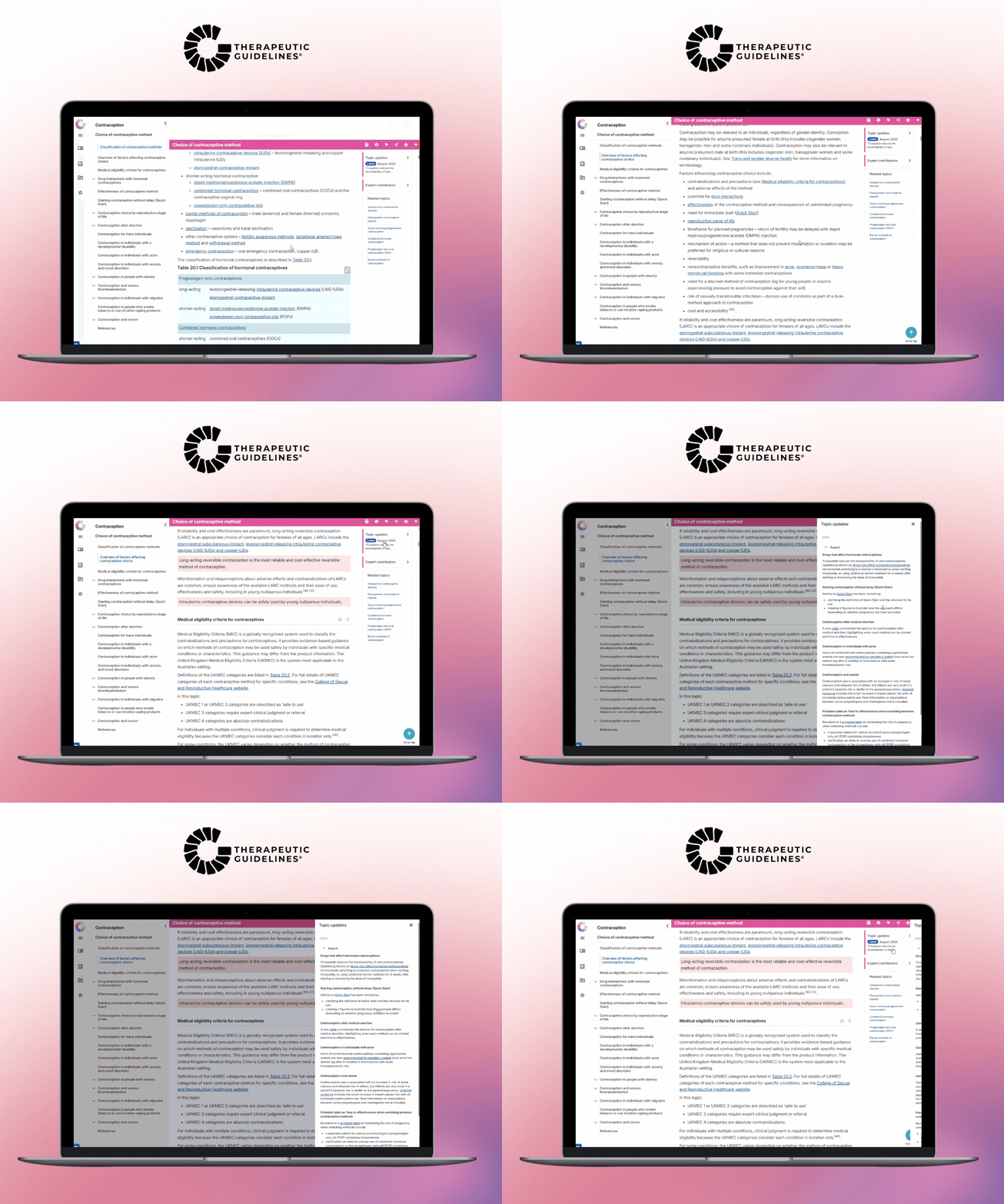
Standing expert writing groups will now meet regularly to monitor for new drugs, safety alerts and changes to national clinical practice guidelines, she said, prioritising practice-changing evidence ‘optimised for the point of care’.
‘For pharmacists, this means even greater confidence in relying on Therapeutic Guidelines as a trusted source of up-to-date, evidence-based advice,’ Ms Rosella said.
Sexual and Reproductive Health is one of three guideline areas – alongside Respiratory and Diabetes – trialling the model, with more to follow in 2026 and 2027.
‘Pharmacists can track changes via the Therapeutic Guidelines homepage,’ Ms Rosella added.
Sexual and Reproductive Health Standing Expert Group members Corey Borg, Acting Lead Medicines Information Pharmacist, SA Pharmacy; and Dr Clare Boerma, Medical Director Family Planning Australia, contributed to this article.
Browse PSA’s Education Catalogue for more information on prescribing and dispensing contraceptives in your jurisdiction.