


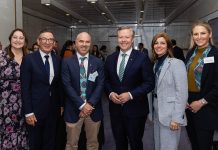




I am deeply humbled to have been elected National President of the Pharmaceutical Society of Australia – to lead our profession as we seek to overcome new challenges and provide better care for our communities.
I am honoured to be the first woman and the first person from a diverse cultural background elected to this role. This is an important milestone for our profession and demonstrates the progressiveness of our PSA Board. Together with the Board and Management of PSA, I am confident we can take our pharmacy profession to new heights.
I want to thank Associate Professor Chris Freeman for his service to our profession over the last 4 years. He has had an enormous impact on the way pharmacists practise, from ensuring medicine safety is a national health priority, to securing PSA’s involvement in the 7th Community Pharmacy Agreement.The COVID-19 pandemic forced the roles of pharmacists to rapidly evolve, and while there have been many challenges along the way, I am excited for the future of our profession.
This future must include fair remuneration and recognition for our hard work and for the value we add to our patients’ lives, regardless of practice setting. Pharmacists must be empowered to practise to full scope, and we must ensure that the skills and expertise of pharmacists are available wherever medicines are used. We must provide new and exciting career pathways that allow pharmacists to specialise and achieve greater levels of career satisfaction. Community pharmacists must be recognised and valued as primary healthcare providers and should be further integrated into the Australian primary healthcare system. Pharmacists must playa key role in reducing unnecessary emergency department presentations and hospitalisations.
We need to work together, as a profession and collaboratively with other healthcare providers, to ensure sustainability of our healthcare system and the highest quality of care for our patients.By continuing to foster close partnerships with universities and research institutions, we can maintain synergy between pharmacist clinicians and academics to enable evidence-based practice, which in turn will support sustainable funding for our workforce.
And finally, the pandemic has highlighted a need to upskill pharmacists worldwide, particularly in neighbouring developing countries. As leaders in pharmacy practice, we have a social responsibility to contribute to world health. I’d like to lead PSA to make a global impact.
Despite momentous progress in our profession over the past 3 years, there is much more to be done. Let us work together to turn burnout into breakthrough, and dejection into enthusiasm and aspiration!