


 Stewart Mearns MPS[/caption]

 Zara Gul[/caption]




One in 7 Australian women live with endometriosis, yet diagnosis can still take almost a decade. As awareness grows and new initiatives roll out, pharmacists play a pivotal role in early recognition, medicines management and compassionate care.
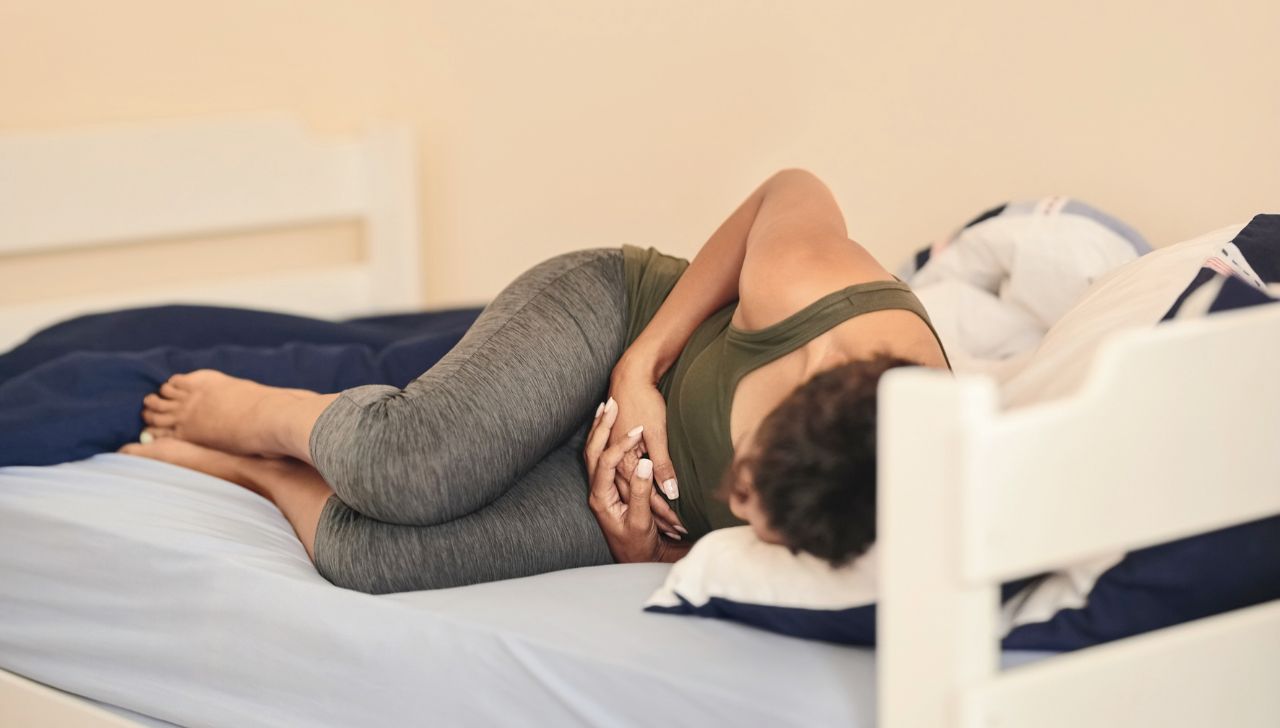
Jessica vividly remembers getting her first period at a sleepover when she was 13. The youngest of four girls, she was largely unfazed by what her mum had called ‘joining the sisterhood’. What she didn’t realise was that it would mark the start of a decades-long health struggle.
Now 35, Jessica has lived with frequent, heavy, painful periods for more than 22 years. There have been mornings she couldn’t get out of bed, workdays missed and social events abandoned at the last minute. She experiences pain during sex, which has caused strain in previous relationships, and she worries about her fertility. More than once, she’s been told this is simply ‘a woman’s lot’.
Jessica’s story may sound familiar to the nearly 1 million Australian girls, women and people assigned female at birth living with endometriosis.¹ Defined as ‘endometrial-like tissue proliferating outside the uterus’, endometriosis is a chronic, inflammatory, gynaecological disease with no known cure.² But it is also so much more, says Mónica Forlano, Chair of Endometriosis Australia.
‘The most important thing to understand is that endometriosis is not a reproductive condition – it is a whole body, lifelong chronic condition,’ Ms Forlano says. ‘Yes, it sometimes manifests as pain, bloating, brain fog, fatigue and for – 1 in 3 – fertility issues, but it’s an enigma that can curtail someone’s career, schooling and social life. It affects every aspect of a person’s existence, not just their periods or fertility.’
A national response
For much of human history, females have been taught to feel shame about their bodies and biological functions. Many have been told to bear debilitating periods in silence, have faced accusations of exaggerating – or even inventing – their pain.
These attitudes persist. A 2025 Victorian Government inquiry into women’s pain – the first of its kind in Australia – revealed 71% of respondents saw it as ‘widespread dismissal by healthcare professionals’ and a primary challenge when seeking help.³
More than half also reported delayed diagnoses that led to ‘years of unnecessary suffering and, sometimes, worsened health outcomes’.
Some progress is being made. The National Action Plan for Endometriosis,⁴ released in 2018, marked the first significant step forward in addressing endometriosis in Australia. It focuses on three priority areas: awareness and education, clinical management and care, and research.
A cornerstone initiative is the rollout of Endometriosis and Pelvic Pain Clinics across the country. At the time of writing, 22 clinics are operational, with 11 more planned to open in early 2026 – ensuring at least one in every Primary Health Network region. These clinics provide interdisciplinary care, referral services, access to early intervention and a range of treatment options.⁵
The federal government is also funding the development of an Endometriosis Management Plan⁶ for primary care, and has supported the Royal Australian and New Zealand College of Obstetricians and Gynaecologists (RANZCOG) to produce the Australian Living Evidence Guideline: Endometriosis,⁷ providing evidence-based recommendations for clinicians.
Will this make a difference? Chairperson of Chronic Pain Australia Nicolette Ellis MPS (she/her) says yes.
‘The pelvic pain clinics are a major step forward because they embed pelvic pain as core business in primary care. Their integrated, multidisciplinary approach aligns with best evidence and supports earlier intervention, reducing the chronicity of disease. We’re seeing clearer referral pathways and better collaboration across gynaecology, physiotherapy and psychology.’
Ms Forlano agrees the clinics are ‘exactly the kind of equitable access we need,’ particularly for patients who have struggled to navigate siloed systems. However, she says ‘fundamental challenges persist’, including a roughly 7-year diagnostic delay.⁸
‘We’d like to see continued investment in research, expanded access to interdisciplinary care, and most critically, urgent attention to that persistent 6–7-year diagnostic delay,’ she says. ‘Every year someone waits is another year of unnecessary suffering and disease progression.’
Inclusive endometriosis careEndometriosis is often framed solely as a “women’s health” condition. Nicolette Ellis MPS (she/her), Chairperson of Chronic Pain Australia, shares how pharmacists can help transgender and non-binary patients feel seen and safe. ‘Trans and non-binary people often face misgendering, discrimination and the misconception that only cis women experience endometriosis, leading to delayed or avoided care,’ Ms Ellis says. ‘Using terms like “people who menstruate” or “people with a uterus” and avoiding assumptions based on appearance or records helps ensure inclusivity. ‘Collecting pronouns, using inclusive signage, asking gender-neutral questions about pelvic or menstrual symptoms, and clearly signalling that care is available for people of all genders encourages trans and non-binary patients to access pelvic-pain support. ‘Stocking heat packs, TENS devices, period products and bladder/bowel aids, and providing information about local pelvic pain physiotherapists, clinics and support organisations shows that people of all genders living with endometriosis or pelvic pain are seen, believed and supported. ‘Conversations should take place in a private consultation area, not over the counter, as a standard for all sensitive health issues. Start with neutral, open questions such as, “Do you experience periods or pelvic pain?” Mirror the person’s preferred language, and if unsure, ask respectfully: “Is there a better way I can word this?” Avoid gendered terms like “ladies’ problems” in favour of “pelvic health” or “menstrual health”. ‘Gender-affirming hormones can mask or alter endometriosis symptoms. Pharmacists should check in about breakthrough bleeding, pelvic pain, mood changes, and potential interactions with hormonal or neuropathic pain medications. Where cyclical pain is clear, evidence supports a therapeutic trial of ovarian suppression before considering diagnostic laparoscopy. Shared care between GP, endocrinology and gynaecology teams is especially helpful in complex cases.’ |
 Normalisation is medical misogyny and delays diagnosis
Several systemic barriers contribute to the delayed diagnosis many patients have experienced. One is cultural: the normalisation of crippling period pain.
‘Medical misogyny still leads many people to be told their pain is “normal” or stress-related, or something pregnancy will fix,’ Ms Ellis says. ‘This erodes trust. When menstruation is trivialised, people minimise symptoms and often present only once the pain is severe or disabling.’
Limited access to specialists is another problem. Long waits to see gynaecologists – especially in regional and rural areas – delay diagnosis and treatment. Diagnosis remains complex. Although high-quality transvaginal ultrasound and MRI are increasingly used to detect endometriosis, many still rely on a laparoscopy, an invasive examination, for diagnosis.⁹
Substantial financial costs
The financial burden also compounds inequity. People with endometriosis spend about $30,000 each year on direct and indirect costs, which only increases for those outside major cities.⁹
Co-Chair of the Access, Care and Outcomes Subcommittee for the National Women’s Health Advisory Council and immediate-past PSA National President Associate Professor Fei Sim FPS (she/her)says that while specialised clinics are a positive development, more needs to be done to improve access to care.
‘Australia is still falling short in equitable access, with long wait times, high out-of-pocket costs and limited availability outside metropolitan areas,’ she says. ‘What works well in the clinics is the team-based approach, but what needs improvement is affordability, inconsistent models of care and insufficient long-term funding.’
Pharmacists ‘underutilised’
People living with chronic pain seek answers and reassurance and community pharmacies are often their first, and most frequent, touchpoint. ‘Pharmacists continue to be an underutilised resource,’ A/Prof Sim says. ‘Existing health infrastructure, including GP clinics and community pharmacies, should be empowered to deliver more care.’
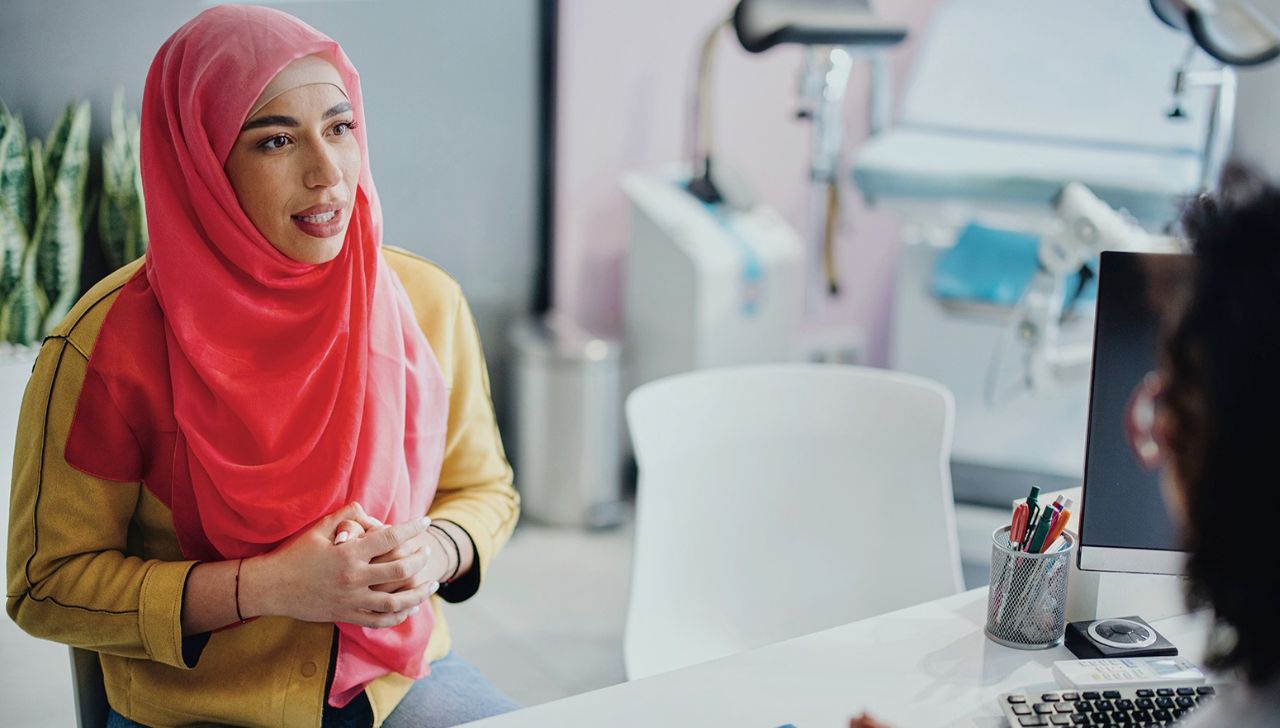
In a health system which too often encourages non-pharmacological or simple analgesic interventions for complex pain – community pharmacists have an important role in being a circuit-breaker.
‘Pharmacists can help by recognising whether symptoms are cyclical, bowel-related, bladder-related or musculoskeletal, and supporting early medical management that reduces chronicity,’ Ms Ellis says.
‘Encouraging timely GP review and knowing a local pelvic pain physiotherapist – who are game-changers – helps ensure patients reach the right care earlier.’
And pharmacists shouldn’t underestimate the significance of what could seem like a really simple intervention:
‘Being listened to and believed is itself a therapeutic intervention,’ Ms Ellis adds. Validating language is critical. Just hearing the words ‘your pain is real and deserves proper assessment’ can make a difference.

‘Silent’ endometriosisIn November 2025, 774 ABC Radio Melbourne breakfast co-host Sharnelle Vella announced10 she was ‘beyond terrified’ but also overjoyed at finally becoming pregnant. Telling her audience she would be taking maternity leave in February 2026 to give birth to a baby girl, she also revealed how her pregnancy came after years of fertility issues, miscarriage and failed rounds of IVF treatment. The cause? Stage 4 endometriosis found during an exploratory laparoscopy in March 2025 to investigate mild pelvic inflammation that had been revealed by a blood test. Unlike many who live with the condition, the one pointer to Ms Vella’s endometriosis had been her infertility. ‘Put simply, I was riddled with it,’ she told listeners. But without the symptoms including the crippling pain that afflicts many women, she’d had no idea. She recalls talking to the surgeon afterwards. ‘I asked, “Did you find anything?” He half-laughed, shook his head and said a sentence that will stay with me forever: “Sharnelle, you have stage four endometriosis – we were cutting it out of you for 3 hours.”’ ‘How many stages are there?’ I asked. “There are four,” he replied.’ Having put her life on hold numerous times, not taken holidays, not taken jobs, ‘you commit to nothing – except this journey’, she tearfully explained, saying she had become pregnant without assisted reproduction therapies just 3 months later. Ms Vella wanted listeners who may be experiencing the same ‘unimaginable grief’ of infertility to know that they were not alone. While Australian Institute of Health and Welfare data shows that 1 in 7 people assigned female at birth in Australia have endometriosis,¹1 some, like Ms Vella, are asymptomatic and only discover there is a problem when trying to conceive. Dr Pav Nanayakkara, a gynaecologist at Jean Hailes for Women’s Health clinics in Melbourne says it’s important to remember endometriosis can affect people differently. ‘For some, it’s very mild, they might not know they have it at all. For others it can be very severe and really impact their daily life. Because of that lack of understanding around the condition, people don’t necessarily know how it can present,’ she says.¹ While ‘about 30–50% of people with endometriosis have some degree of infertility’, most people ‘will go on to fall pregnant by themselves,’ Dr Nanayakkara adds. ‘Sometimes that depends on what stage of endometriosis the patient has, but most people will go on to fall pregnant by themselves. So, it can have implications, but it doesn’t make them infertile.’ |

Using medicines better
The RANZCOG guidelines suggest a short trial of a non-steroidal anti-inflammatory (NSAID) alone or in combination with paracetamol to manage pain.
But hormonal treatment is also recommended as a first-line therapy.
While the combined oral contraceptive pill and progestogens are usually the first step, second-line treatments, including gonadotropin-releasing hormone agonists and antagonists, should be initiated if symptoms don’t improve or adverse
effects occur.⁷
The experience of many individuals with endometriosis is that shifting from first-line to second-line hormonal treatments takes too long and isn’t
proactively offered.
Medical misogyny is part of the problem. The inertia of funding barriers is another. But some recent changes aim to tackle this challenge.
In 2024, the Therapeutic Goods Administration approved the fixed-dose combination of relugolix, estradiol and norethisterone (Ryeqo) to treat moderate to severe endometriosis-associated pain.
Aimed at patients with a history of medical or surgical treatment, the addition took the number of medicines indicated for the treatment of endometriosis in Australia to six.¹3
Later that year, dienogest (Visanne) was listed on the Pharmaceutical
Benefits Scheme (PBS) – the first time in 30 years that individuals with endometriosis had access to a new PBS-subsidised treatment.¹⁴
New approaches are also being explored. A team at the Royal Adelaide Hospital is trialling a new intrauterine device¹⁵, while Western Sydney University
is running a clinical trial to examine the efficacy of different medicinal
cannabis interventions.¹⁶
Around 60–70% of people also use some form of complementary, non-pharmacological management, including acupuncture, Chinese herbal medicine, physiotherapy, exercise and nutrition strategies.⁷
However, these aren’t always accessible, says Grace Wong MPS, Medication Safety Pharmacist at The Royal Women’s Hospital in Melbourne.
‘Healthcare professionals often assume patients can easily access non-pharmacological interventions, but many require time, travel or out-of-pocket costs,’ she says.
‘Living with pain can be overwhelming. Making things easy and doable is key.’
With many patients navigating diagnostic uncertainty, Ms Wong says pharmacists should reassure them that ‘chronic pelvic or vaginal pain is not normal and women shouldn’t just “put up with it”.’
Looking ahead
Policy efforts now need to ‘focus on sustainable funding, scaling access in regional and rural areas and using existing infrastructure to deliver enhanced care’, according to A/Prof Sim.
Research priorities should include earlier diagnostic biomarkers, long-term outcome studies of models of care, culturally safe models for First Nations peoples and interventions to build
health literacy.
Education remains vital. Programs like PPEP Talk,¹⁹ run by the Pelvic Pain Association of Australia, help young people understand what’s normal when it comes to menstrual health – and what’s not.
‘Early education in schools is vital,’ A/Prof Sim says. ‘We need to reduce stigma, support earlier symptom recognition and empower girls and young women to speak up, seek care sooner and navigate the health system with confidence.’
HPV vaccination clinics and school-based health programs are ideal opportunities to explain what isn’t normal period pain and provide advice on where to get help, Ms Ellis says.
Incorporating menstrual health into medicine reviews with young people can also support earlier recognition of pelvic, bowel or bladder symptoms that often emerge in adolescence.
‘When close to 1 million Australians are affected by a condition, every healthcare touchpoint matters,’ Ms Forlano says.
‘Understanding and support can be the difference between someone suffering in silence or finding the help they need. Let’s work together to ensure no one has to wait 6–7 years for a diagnosis, and that every person with endometriosis has access to the care and support they deserve.’
References
- Endometriosis Australia. About Endometriosis. At: endometriosisaustralia.org/about-endometriosis1/
- Crump L, Suker A, White L. Endometriosis: A review of recent evidence and guidelines. AJGP. 2024. 53:1. At: www1.racgp.org.au/ajgp/2024/january-february/endometriosis
- Victorian Government Department of Health. Bridging the Gender Pain Gap. 2025. At: www.health.vic.gov.au/sites/default/files/2025-11/bridging-the-gender-pain-gap-pain-inquiry-report.pdf
- Australian Government Department of Health, Disability and Ageing. National Action Plan for Endometriosis. 2018. At: www.health.gov.au/sites/default/files/national-action-plan-for-endometriosis.pdf
- Australian Government Department of Health, Disability and Ageing. Endometriosis and pelvic pain clinics. 2025. At: www.health.gov.au/our-work/endometriosis-and-pelvic-pain-clinics?language=en
- SPHERE. The Endo-MP Project. At: www.spherecre.org/research/current-trials/endometriosis-management-plan
- RANZCOG. Australian Living Evidence Guideline: Endometriosis. 2025. At: ranzcog.edu.au/womens-health/endometriosis/
- Frayne J, Milroy T, Simonis M et al. Challenges in diagnosing and managing endometriosis in general practice: A Western Australian qualitative study. AJGP. 2023. 52:8. At: www1.racgp.org.au/ajgp/2023/august/challenges-in-diagnosing-and-managing-endometriosi
- Parliament of South Australia. Final report of the select committee on endometriosis. 2025. At: www.pelvicpain.org.au/wp-content/uploads/2025/04/FINAL-REPORT-OF-THE-SELECT-COMMITTEE-ON-ENDOMETRIOSIS-19-March-2025-2.pdf
- ABC Radio Melbourne. ABC host Sharnelle Vella expecting a baby after fertility struggle. 2025. At: www.abc.net.au/news/2025-11-19/abc-presenter-sharnelle-vella-pregnant-ivf-struggles/106023456
- Australian Institute of Health and Welfare. 1 in 7 Australian women aged 44–49 have endometriosis. 2023. At: www.aihw.gov.au/news-media/media-releases/2023/2023-september/1-in-7-australian-women-aged-44-49-have-endometriosis
- ABC Listen. Melbourne mornings. 19 November 2025. At: www.abc.net.au/listen/programs/melbourne-mornings/mornings/106014554
- Gedeon Richter. First treatment for endometriosis in 13 years in Australia approved by TGA. 2024. At: www.gedeonrichter.com/au/-/media/sites/au/documents/media-release-c_ryeqo-tga-approval_gedeon-richter-australia_final.pdf?rev=1cc37d3726f84e9ca71d4c094c1e3dd6
- Butler M. Life changing endometriosis treatment now cheaper. 2024. At: www.health.gov.au/ministers/the-hon-mark-butler-mp/media/life-changing-endometriosis-treatment-now-cheaper?language=en
- Pelvic Pain Foundation of Australia. Alyra Device pelvic pain clinical trial. At: www.pelvicpain.org.au/alyra-tech-trial/
- Pelvic Pain Foundation of Australia. EndoCann. At: www.pelvicpain.org.au/endocann/
- Australian Government Department of Health, Disability and Ageing. What we’re doing about endometriosis. 2025. At: https://www.health.gov.au/topics/chronic-conditions/what-were-doing-about-chronic-conditions/what-were-doing-about-endometriosis?language=en
- Tomsett KI, Mardon AK, Gao OW, et al. Prevalence and impact of pelvic and period pain in adolescents; the PPEP Tall Schools Program. Aust NZ J Obstet Gynaecol 2025. Epub 2025 March 14.
- Pelvic Pain Foundation of Australia. PPEP Talk. At: www.pelvicpain.org.au/ppep-talk-schools-program