






Long before it became a standard patch for travel sickness, scopolamine was at the centre of a controversial obstetric practice that targeted a mother’s memory rather than her pain.
A naturally occurring tropane alkaloid derived from plants in the nightshade family, including Hyoscyamus niger (henbane), Scopolia carniolica and Datura species, scopolamine was first isolated by German chemist Ernst Schmidt in 1880.¹ It was initially recognised for its powerful sedative, antisecretory and amnesic properties.¹
However, its most consequential and widely debated historical application occurred in early 20th-century obstetrics through a protocol known as Dämmerschlaf, or ‘twilight sleep’.2
The amnesic protocol
Developed by physicians Carl Gauss and Bernhardt Krönig at the University of Freiburg, twilight sleep combined scopolamine with morphine.2,3 Despite its reputation, the protocol did not actually eliminate the physical pain of labour.4
Instead, because scopolamine temporarily disrupted the cholinergic pathways required for memory consolidation,5 women would move through childbirth in a dissociated, amnesic state and wake up with little or no recollection of the experience.4
From around 1914, the practice gained huge traction in the United States, driven largely by an advocacy movement of middle- and upper-class women who framed it as a progressive feminist cause.6 Popular magazines like McClure’s ran highly enthusiastic features, fuelling public demand that quickly outpaced hospitals’ ability to deliver the practice safely and consistently.6
Clinical realities
Public advocacy for twilight sleep tended to gloss over the clinical reality of the procedure. Because scopolamine easily crosses the blood-brain barrier, high doses can trigger central anticholinergic syndrome, leading to delirium, hallucinations and motor restlessness.7,8
To manage this, women were typically kept in darkened, quiet rooms to prevent any external sensory stimulation from inadvertently embedding lasting memories.2 Patients were also frequently physically restrained in specially made ‘crib-beds’ to prevent self-injury during their uninhibited, amnesic states.9
The patient’s subjective experience in the moment was treated as clinically irrelevant, provided complete amnesia was achieved by the time she awoke.9
The high drug doses also carried severe risks for the newborn, often causing respiratory depression or so-called ‘blue babies’ – infants whose oxygen-deprived skin turned cyanotic and who often required immediate resuscitation.4
Shifting applications
The American twilight sleep movement rapidly declined after 1915 following the death of a prominent advocate during childbirth, though the role of the drugs in her death was fiercely contested.3
Even so, variations of scopolamine-based sedation remained common in hospitals well into the 1960s.9 Around the same time, scopolamine’s capacity to induce disorientation and lowered inhibition attracted the attention of criminologists. During the 1920s, it underwent brief trials as an interrogation aid and purported ‘truth serum’ before ultimately being abandoned as unreliable.1
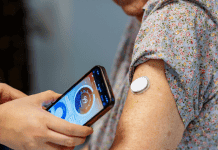
Today, scopolamine is used in much safer and more targeted ways. In 1979,
the US Food and Drug Administration approved transdermal scopolamine patches for motion sickness, which deliver a steady dose to block vestibular pathways without triggering central adverse effects.10
While the patch is only available in Australia via the Special Access Scheme for refractory conditions,11 injectable forms remain widely used around the world in pre-operative care to reduce saliva and respiratory secretions,5 as well as in palliative care to manage end-of-life symptoms.12
References
- Geis G. In scopolamine veritas. J Crim Law Criminol 1959;50(4):347–57.
- Gauss CJ. Geburten in künstlichem Dämmerschlaf. Arch Gynakol 1906;78(3):579–631.
- Taylor E. Hanna Rion and The Weekly Dispatch’s twilight sleep crusade. Med Humanit 2023;49(4):659–67.
- Caton D. What a blessing she had chloroform: the medical and social response to the pain of childbirth from 1800 to the present. New Haven: Yale University Press. 1999.
- Brunton LL, Knollmann BC, Hilal-Dandan R, eds. Goodman & Gilman’s the pharmacological basis of therapeutics. 13th edn. New York: McGraw-Hill Education. 2018.
- Sanderson J, Love HA. “The highest in each class was a twilight baby”: scientific motherhood, twilight sleep and the eugenics movement in McClure’s Magazine. Med Humanit 2024;50(2):222–34.
- Aronson JK. Meyler’s side effects of drugs. 16th edn. Amsterdam: Elsevier. 2016.
- Klaassen CD, ed. Casarett & Doull’s toxicology: the basic science of poisons. 9th edn. New York: McGraw-Hill Education. 2019.
- Leavitt JW. Birthing and anaesthesia: the debate over twilight sleep. Signs (Chic) 1980;6(1):147–64.
- Brainard A, Gresham C. Prevention and treatment of motion sickness. Am Fam Physician 2014;90(1):41–6.
- Therapeutic Goods Administration. Special access scheme (SAS): guidance for health practitioners accessing unapproved therapeutic goods. 2024. At: www.tga.gov.au/resources/guidance/special-access-scheme-sas-guidance-health-practitioners-accessing-unapproved-therapeutic-goods
- World Health Organization. Review on palliative care with focus on 18 high tuberculosis priority countries, 2020. Geneva: WHO. 2021. At: www.who.int/europe/publications/i/item/9789289055413