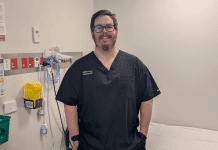
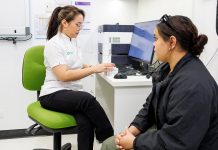






Renal expert Carla Scuderi explains the lifelong care journey pharmacists provide to kidney disease patients.
Why specialise in kidney care?
I think kidney health chose me! I was hoping to specialise in a clinical area when a job in the Kidney Health Service came up at the Royal Brisbane and Women’s Hospital. I didn’t know what I was getting myself into, but I couldn’t believe my luck. Here was an area of specialised care in an acute hospital setting with all the feels of community pharmacy. Working in kidney health means providing cradle-to-grave care. You build long-term relationships with patients and support them through key life stages – from family planning to kidney failure and palliative care. Much of the work involves ambulatory care – comprising outpatient clinics, acute or satellite hospital dialysis settings, or home-based therapy – as well as acute inpatient admissions.
What does a kidney specialist do?
Provide medicines advice to patients and the entire multidisciplinary team and ensure medicines are available in each off-site dialysis area while coordinating the pharmacy team across these areas. This might be a visit to a dialysis unit to review new patients or a one-on-one patient consult in the clinic, followed by a consultation with the multidisciplinary team about medicine-related issues. It could also cover admissions in the emergency department through to ward rounds and reviews. Medicines access, tolerability, affordability and polypharmacy are big issues for patients with kidney disease. We also work closely with dietitians, social workers, nurses and nurse practitioners, and nephrologists.
How can community pharmacists help to identify CKD?
Over 2 million Australians are living with kidney disease and fewer than 10% of patients with chronic kidney disease (CKD) are aware they have it. Kidney Health Australia has a great handbook outlining the management of CKD in primary care, with community pharmacists being hugely important in encouraging people to get tested and supporting the lifestyle changes required to reduce the progression of CKD, such as smoking cessation.
Pharmacists can also ask patients when they last had their kidneys checked; particularly anyone with high blood pressure or diabetes. For example, if you offer blood pressure monitoring and the reading is high, ask about the kidneys. Some community pharmacies even have access to point-of-care kidney function estimation devices – brilliant!
What’s the future role of pharmacists in kidney care?
It’s an exciting time to be working in kidney care. New drugs such as sodium-glucose co-transporter 2 inhibitors, glucagon-like peptide-1 receptor agonists and non-steroidal mineralocorticoid receptor antagonists are emerging as superstars in slowing the progression of CKD. I think the future will be much more closely linked with cardiology and metabolic health rather than exclusively kidneys. The link between cardiac disease and kidney health has been given the name cardiovascular-kidney-metabolic (CKM) syndrome. Increasingly, we are using the same drugs to treat all three conditions. I also think pharmacogenomics will play a role in determining which patients are not suited to certain blood pressure medicines, for example, which will help to improve patient outcomes. Hopefully, the future will bring less reliance on dialysis, earlier diagnosis and more successful transplants – allowing people to live well and slowing the progression of CKD.
Any advice for pharmacists keen on specialising in kidney care?
Look for opportunities in adjacent fields such as cardiology and general medicine to build your knowledge. Clinical review skills, ability to perform home medicines reviews and good general drug knowledge are all essentials. You should also prepare to be confronted with blood; watching patients being put onto the dialysis machines can be confronting, particularly if you are queasy. And develop great people skills, because you’ll be with these patients for the long haul. But give it a go, it’s fantastic.
A Day in the life of Carla Scuderi, Assistant Director of Pharmacy Clinical, Royal Brisbane and Women’s Hospital, Brisbane, QLD
| 7.30 am | Early start First job of the day is to coordinate the team and manage any staffing shortfalls. Attend the hospital executive huddle to get an idea of what the day looks like, including planned admissions, surgery and discharges. |
| 8.30 am | Outpatient clinic Transplant clinic is my go-to as these patients have very complex immunosuppressant regimens and medication adherence is paramount. Ensuring we have the drug levels right and making sure patients are managing their other comorbidities, such as hypertension and diabetes, is critical. I review their pathology, weight, blood pressure, dispensing history, self-reported adherence and adverse effects – providing an updated medication list to assist with dose administration aid packing. |
| 11.00 am | Morbidity and mortality meeting Monthly all service line review of patient deaths and unexpected outcomes. This is an opportunity to review patient care, ensure systems are working appropriately and apply learnings to improve outcomes. From a pharmacy perspective, this can include ensuring access to medicines was timely. |
| 1.00 pm | Lunchtime grand rounds Lunchtimes are spent learning with the team. One of the best parts of being part of a big institution is hearing what all the other parts of the hospital do. This week grand rounds were presented by the endocrinology department, who outlined a trial on thyroid replacement treatments. |
| 2.00 pm | Statewide Renal Network meeting Weekly catch up with the Statewide coordinator and my co-chair, a nephrologist in Cairns. There’s an issue regarding potential out-of-stock supplies of a component required for dialysis. Fortunately, we discover that there isn’t a stock shortage, merely a distribution issue. |
| 4.30 pm | Home duties begin Serve as an Uber driver for the teens’ various sport, social or work commitments and ensure the home crew are fed. If I’m lucky, I can sneak in a walk around the Brisbane River or even some laps at the pool. |