




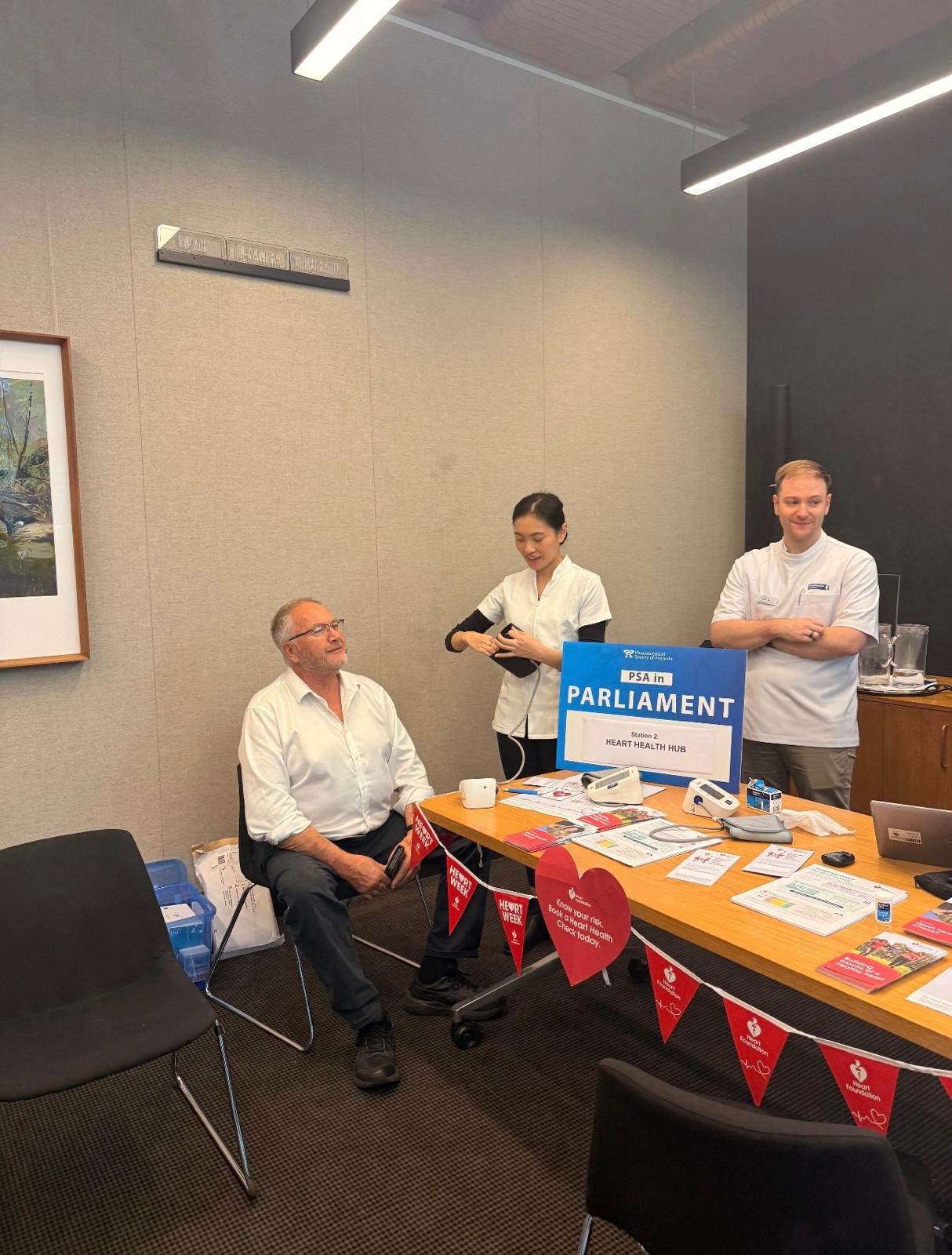
 A pop-up pharmacy clinic offering screening services after breakfast[/caption]




Case scenario
Thom, 37, a regular patient of the pharmacy, presents their venlafaxine repeat for dispensing. You know this has been prescribed for PTSD and ask how they have been going with their treatment. They disclose that their symptoms have been difficult to manage over the last few weeks and that they don’t feel like their medication has been working as well. Thom explains that a friend mentioned MDMA could be used for PTSD, and they’re now considering taking it to help them feel better.
Introduction
The Therapeutic Goods Administration (TGA) has announced the down- scheduling of psilocybin and 3,4-Methylenedioxymethamphetamine (MDMA) from Schedule 9 (Prohibited Substances) to Schedule 8 (Controlled Drugs) under certain conditions, for specific populations. This change is from 1 July 2023, and while there is still some uncertainty related to the change in legislation, pharmacists will likely be involved in supplying these medicines. This article outlines the changes in Australia, gives an overview on the evidence behind the use of these psychedelics, and gives examples of potential interactions to be alert for with these substances.
Learning objectivesAfter reading this article, pharmacists should be able to:
|
THIS IS A CPD ARTICLE. YOU NEED TO BE A PSA MEMBER AND LOGGED IN TO READ MORE.