

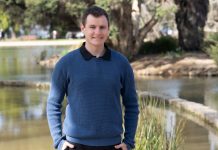





Tasmania’s newest branch committee member Millicent Borowicz MPS shares how patient advocacy and expanded services are transforming health outcomes for rural communities.
What inspired your career in rural healthcare?
My passion started during a third-year placement at university when I worked at a rural pharmacy. I ended up going back during my fourth year, spending time at two rural pharmacies co-owned by the same pharmacist, because I enjoyed it so much.
During my time at these pharmacies, I experienced the real community pharmacy that we learn about at university. I admired the connection with the local community and valued the opportunity to make a difference in the lives of people who are geographically disadvantaged.
How are you helping to improve health outcomes in the community?
Through collaboration with different healthcare services that were previously siloed. At the community pharmacy where I work, Tasman Pharmacy, we have worked hard to build strong relationships with local allied health professionals.
This has enabled us to act as a triage point for patients and advocate on their behalf with local doctors when needed. When a patient presents with symptoms that require more urgent medical attention, we contact the relevant practice, explain the situation and, where possible, facilitate a timely appointment. This has allowed patients who may otherwise underestimate the seriousness of their condition to access medical attention sooner.
I have also completed a graduate certificate in diabetes education to help fill a gap in diabetes care. The only option to see a diabetes educator in the area is online via telehealth, which is not practical for a significant proportion of our population due to lack of digital access and literacy.
Have you introduced or expanded any health services?
Since working on the Tasman Peninsula, I have tried to keep increasing my skillset by implementing services such as UTI consults, long-acting injectable buprenorphine injections, and expanding our vaccination delivery. I have also helped to set up an Aged Care On-site Pharmacist role in the local nursing home, and conduct medication reviews for residents as well as expanding the delivery of Home Medicines Reviews (HMRs).
What are the rewards and challenges of rural pharmacy?
The most rewarding thing about working as a pharmacist in rural Tasmania is building relationships with the local community. Working in an isolated area means we get to see a wide range of patients, and the level of trust and support we are able to develop is incredible.
But rural pharmacy definitely has its challenges. Trying to manage stock levels when the next pharmacy is 1 hour away can be difficult, so we often call prescribers to discuss other options.
Our patients are often unable to travel into town for their healthcare, so arranging services that can be delivered in the local community is another challenging aspect of the job. But it keeps the work interesting!
What changes would you like to see in rural healthcare?
We struggle to attract healthcare services to the area due to the distance and cost of travel. Extended pharmacy services, such as HMRs, also have quite rigid rules which are often impractical in a rural setting. We are not permitted to deliver any telehealth services, and the Pharmacy Programs Administrator rural loading allowance is restrictive on claiming for travel. So rural healthcare needs increased funding and flexibility around delivery.
During my time on the PSA Tasmanian Branch Committee, I am hoping to provide a voice for rural pharmacists and provide a perspective on what does and does not work in
rural practice.