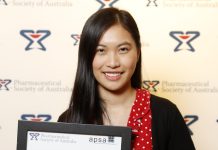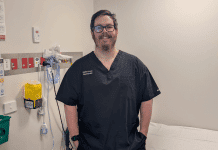






David Froon MPS balances work in clinical toxicology with hospital and community pharmacy, bringing the lessons from each setting to his advocacy for the profession.
What drew you to clinical toxicology and poisons information, and what does your work at the Victorian Poisons Information Centre involve?
I’ve always had a passion for patient queries that aren’t straightforward. I’ve worked in community pharmacy for more than 20 years, and I’ve set up immunisation clinics, clinical trial supply and compounding services at two pharmacies along the way. Compounding and veterinary work mean exploring resources and literature and translating that into useful information for prescribers and patients alike. Poisons information is much like that, which is what drew me to it.
Calls range from everyday errors and misuse of household products – where it’s basic chemistry and first aid after an exposure – through to modifying complicated dosing schedules after administration errors. We also deal with non-medicinal poisonings, including envenomations and environmental, industrial and agricultural chemical exposures.
Can you share an example of a poisoning incident you helped manage?
We see quite a lot of calls that show why pharmacist counselling matters. In one recent call, a patient had a dental extraction and was prescribed immediate-release tapentadol 50 mg. She collected it and started taking the labelled dose of 1–2 tablets four times a day. That evening, when she went to take her sertraline, she became worried about an interaction she’d read about online and called us very late at night.
During the call I found she wasn’t taking any basic analgesia, such as paracetamol, and this was her first time using tapentadol. We ruled out any concerning signs of serotonin excess, had her take paracetamol 1 g four times a day and sent her back to a prescriber that night for an alternative strong pain reliever.
What recent trends have you noticed in the types of poisoning calls you receive?
One is AI. Everyone checks online before they’d even ask their mum for advice these days, and AI is very good at giving the worst possible case and then referring people to a poisons information centre. That’s not a bad thing, but we’re seeing a real increase in calls because of it.
Another is unapproved peptides. They’ve been an issue for many years, but never in these volumes. Melanotan II is still around (especially just before summer), but now we take calls about all sorts of other unregulated lifestyle, weight-loss (retatrutide) and cosmetic (GHK-Cu) peptides – and those three are just the most common.
It’s scary what’s in some of these products, and we get calls about liver injury, anaphylaxis and overdose. I’ve even had a few calls about people sharing peptides, creating a risk of blood-borne viruses. However, most seem to be getting their injecting equipment from needle and syringe programs.
How does your frontline experience inform your work with PSA’s Victorian Branch and the TGA’s medicines scheduling committee?
Having a good working knowledge of a patient’s experience is key to voicing an effective opinion on how we as pharmacists should work with medicines. I see it first-hand: a patient finding an appropriate doctor, getting a prescription, sourcing supply, clinical analysis and translating the jargon into plain language to get a good result for the patient while keeping the whole healthcare team informed.
I also see what happens when any part of that goes wrong. Having that experience lets me form well-grounded opinions on what’s working, what isn’t and what should change. That’s what I bring to PSA’s advocacy.
Where do you see the biggest opportunities for pharmacists to expand their scope of practice?
There’s plenty of debate about prescribing pharmacists, and there are still logistical issues to sort out. But I think there’s a huge opportunity for pharmacists with prescribing rights to be a greater part of the healthcare team – not only in community pharmacy but by extending the role hospital pharmacists already play through partnered pharmacist medication charting. It also makes sense for GP pharmacists, MMR pharmacists, aged care pharmacists and ACCHO pharmacists to be part of a prescribing team, complementing GPs and bringing our expertise wherever medicines are, or are needed.