

 Yvette Anderson (she/her) BPharm, MPS, CredPharm (MMR), ANZCAP (MentalHth, Paeds), CPGx, GradCert Autism[/caption]

 Beyond the core features


 ‘How do we reach them better, and what does that mean for the required skills and competencies of our workforce?’ A/Prof Spinks asked.


 Rhiannon Price, Pharmacist at King Edward Memorial Hospital.[/caption]
 Caspar Townsend MPS, Pharmacist at Perth Children's Hospital compounding unit[/caption]
 Iraq Doali, NSW-based locum pharmacist and content creator[/caption]


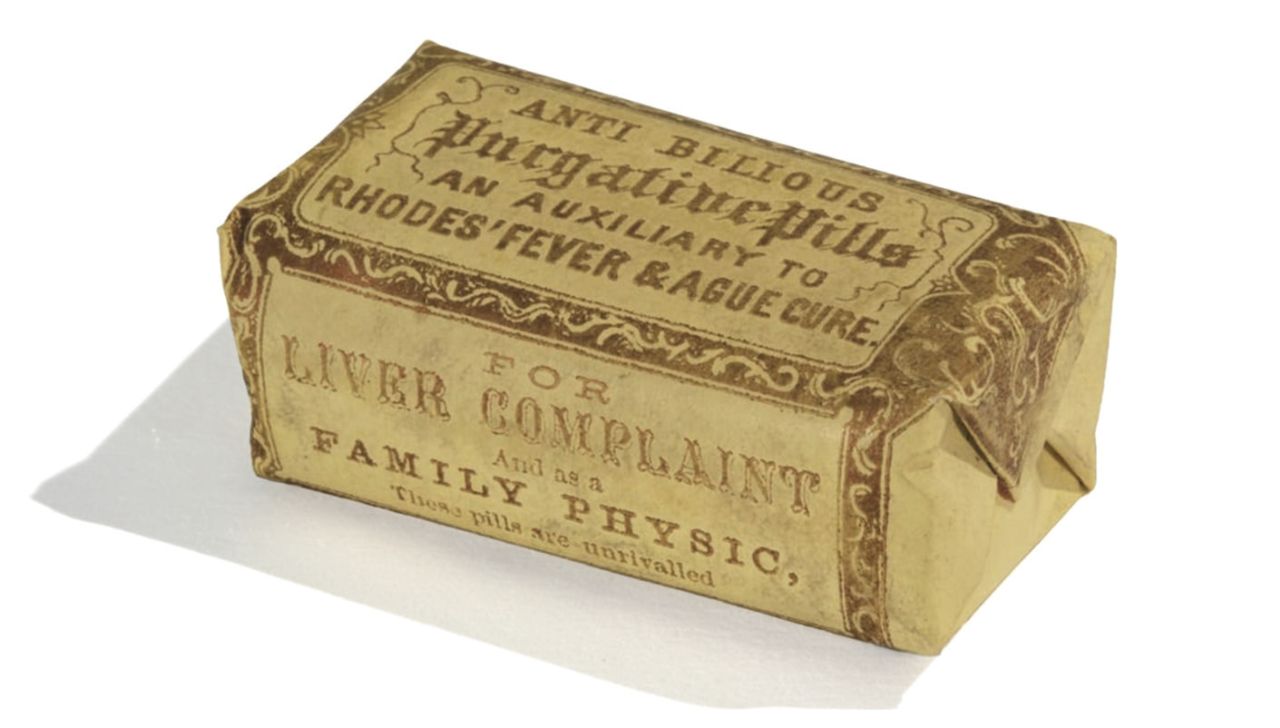
Touted as a universal cure, these mercury-heavy concoctions would come to symbolise both the ambition and the blind spots of early American medicine.
It’s May 1804. Meriwether Lewis and William Clark are about to set off on their exploration of territory newly acquired by US President Thomas Jefferson. Yes, they have a medical kit. Yes, it contains 600 bilious pills. Yes, they were supplied, manufactured, patented and promoted by Lewis’ friend Dr Benjamin Rush, a signatory of the Declaration of Independence.1–4
During their 2-year expedition, Lewis and Clark administered the pills as a cure-all for everything from constipation to fever. They contained calomel, a mercury compound that builds up in the central nervous system and kidneys, and jalap, a plant root. Given that both ingredients are potent laxatives, expeditioners soon called the pills ‘Thunderclappers’ or ‘Thunderbolts’.2,3,5,6
While Rush’s fame helped promote his pills, he had serious competition. In 1796 Samuel Lee Jr received the first American patent for his concoction, Dr Lee’s Windham Bilious Pills. And in 1799 Samuel H. P. Lee – no relation – patented Lee’s New-London Bilious Pills.7,8
Remarkably similar products were sold into the early 20th century, with a milder version of Rush’s pills available until the 1940s.3
Bad bile
The popularity of bilious pills was based on the belief that they corrected a poor flow of bile, a bodily fluid secreted by the liver and stored in the gallbladder. Doctors assumed this condition would trigger a host of symptoms, from constipation, nausea and indigestion to headache, flatulence and general malaise.3,13,14
Pill pushers like Rush held that bloodletting, purgatives and laxatives helped manage such conditions by removing contagion and excess bile from the body.2–4
Magic mercury
As early as 900 AD, doctors were using mercury-based elixirs to trigger vomiting and diarrhoea. As historian Tracey McIntire notes, mercury was used both ‘externally and internally as a cathartic and laxative and to treat liver disease, typhoid fever, diarrhoea, dysentery and various skin diseases’.9
It is unsurprising then that, like his competitors, Rush added calomel – mercurous chloride Hg2Cl2 – to his pills. Each contained roughly 10 grains, more than 40 times what is considered a toxic dose by contemporary standards.2,3,9
By the 18th century, bilious pills were standard therapy for syphilis. And by the 1900s, products like Baldwin’s Bilious and Liver Pills claimed to cure it all: ‘sickness, dizziness, shoulder pains, yellowness of the eyes, skin, brown or yellow coated tongue, bile, jaundice, constipation, piles, all liver troubles’.3,10,14
‘Ruined for life’
In reality, bilious pills caused more harm than health. Ask Elizabeth Storie (1818–1897).11,12
In her 1859 autobiography, the Scottish dressmaker detailed the severe facial deformity she experienced after treatment with calomel for a childhood skin rash. A section of her tongue and primary teeth fell out and her ‘jaw-bone gave way’. A second physician called by her parents said she was ‘ruined for life by the excessive use of mercury’.11,12
While Storie provided a living portrait of the effects of heavy-metal laxatives, Lewis, Clark and company left a chemical trail of them. Archaeologists were able to pinpoint the expeditioners’ route by testing old latrine contents for mercury – a most unexpected, uh, outcome.2,5
- Mark HW. Lewis and Clark expedition. World History Encyclopedia. 2024. Available from: https://www.worldhistory.org/Lewis_and_Clark_Expedition/
-
De Wolfe A. Lewis and Clark’s laxative emergency. Exploring Echoes. 2025. Available from: https://exploringechoes.substack.com/p/lewis-and-clarks-laxative-emergency
-
Higby GJ, Mussulman JA. Rush’s bilious pills: Rush’s thunderbolts. Discover Lewis & Clark. Available from: https://lewis-clark.org/sciences/medicine/rushs-bilious-pills/
-
National Park Service. Medicine on the Lewis and Clark expedition. 2023. Available from: https://www.nps.gov/articles/000/medicine-on-the-lewis-and-clark-expedition.htm
-
Harty C. Mercury laxatives: Lewis and Clark’s evidence. MedShun. 2024. Available from: https://medshun.com/article/what-evidence-is-there-of-lewis-and-clark-mercury-laxatives
-
Finn JD. Offbeat Oregon: Lewis and Clark blazed their trail with heavy-metal laxatives. Spokesman. 2025. Available from: https://redmondspokesman.com/2025/05/01/offbeat-oregon-lewis-and-clark-blazed-their-trail-with-heavy-metal-laxatives/
-
Connecticut History. First American medicine patent – today in history: April 30. CT Humanities. 2020. Available from: https://connecticuthistory.org/first-american-medicine-patent-today-in-history-april-30/
-
Patent Medicine. Early American patent medicines. Medical Discoveries. Available from: http://www.discoveriesinmedicine.com/Ni-Ra/Patent-Medicine.html
-
McIntire T. Bad medicine: sickening Civil War remedies. National Museum of Civil War Medicine. 2022. Available from: https://www.civilwarmed.org/bad-medicine/
-
Baldwin G (Firm). Baldwin’s bilious and liver pills: cures sickness, dizziness, shoulder pains, yellowness of the eyes, skin, brown or yellow coated tongue, bile, jaundice, constipation, piles, all liver troubles. Wellcome Collection; JSTOR. Available from: https://www.jstor.org/stable/community.36630781
-
Lai DG, Nelson HF. “There was death in the powder and he knew it”: dis/ability and tactics of resistance in the autobiography of Elizabeth Storie. Études écossaises. 2026. Available from: https://journals.openedition.org/etudesecossaises/4925
-
Storie E. The autobiography of Elizabeth Storie: a native of Glasgow, who was subjected to much injustice. R. Stobbs; 1859. p. 6–7. Available from: https://archive.org/details/autobiographyel00storgoog/page/n13/mode/2up
-
Dr Spiegel’s stomach and liver pills – a specific for bilious complaints. Bebout Family Medicine. Available from: https://www.beboutfamilymedicine.com/dr-spiegels-stomach-and-liver-pills-a-specific-for-bilious-complaints/
-
Olson DA. Mercury toxicity. In: Nelson SL, editor. Medscape. 2024. Available from: https://emedicine.medscape.com/article/1175560-overview
-
Cleveland Clinic. Mercury poisoning. Health Library. 2022. Available from: https://my.clevelandclinic.org/health/diseases/23420-mercury-poisoning