




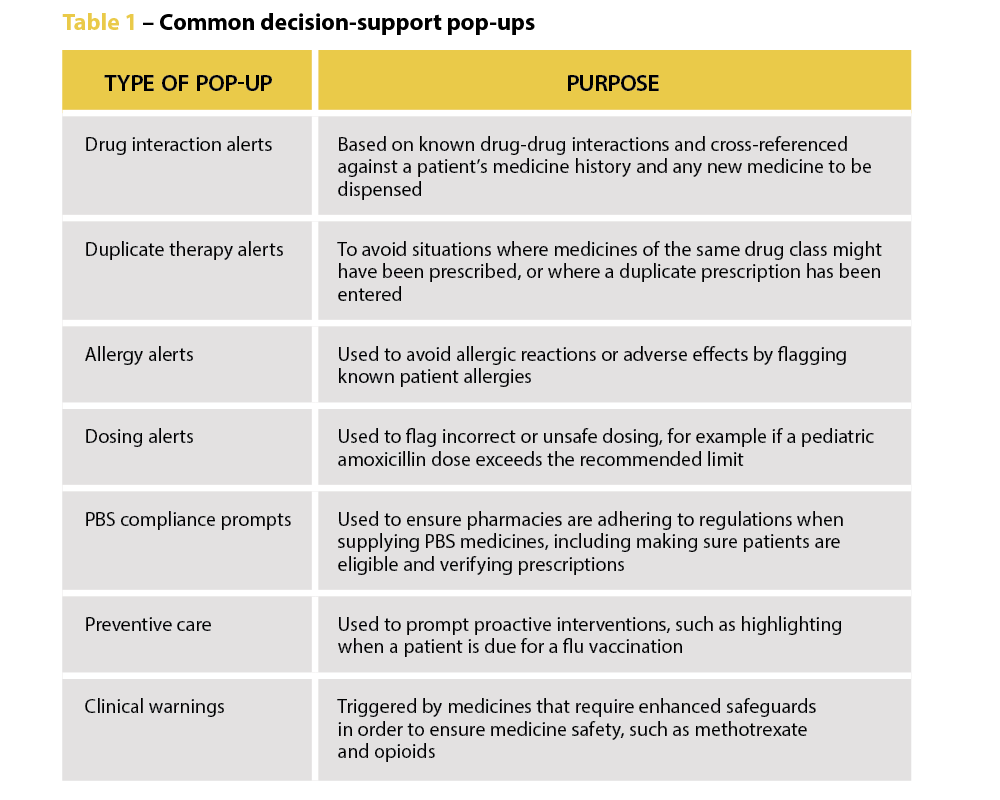
 ‘We’re increasingly seeing incidents where alert fatigue has been identified as a contributing factor. It’s not that there wasn’t an alert in place, but that it was lost among the other alerts the clinician saw,’ Prof Baysari says.
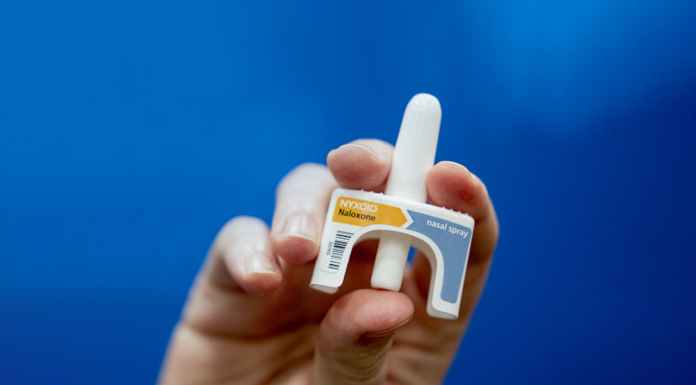
By providing non-judgemental and appropriate counselling on the use of naloxone, pharmacists can empower those who carry it to confidently intervene in the case of opioid toxicity.

Vivienne, a 78-year-old patient of yours, recently started an iron supplement for iron deficiency anaemia (IDA) diagnosed by her GP.

Workplace-based education provides the opportunity for interns to put theory into practice while under the guidance of an experienced pharmacist.

Pharmacists are able to support patients who are undergoing fertility treatment by providing advice on the medicines used in IVF, including the role of each medicine in the treatment cycle, how to use associated injectable devices and the possible adverse effects.

Case Scenario
The nurse unit manager (NUM) of the general medicine ward in the hospital approaches you. She has noticed that her junior nursing staff are not confident with diabetes medicines. She is concerned about their medicine knowledge, methods of...

Vitamin B12 (cobalamin) deficiency can cause serious haematological, neurological and psychiatric problems. Early diagnosis and treatment may reverse deficiency and minimise harms.

Impetigo is a highly contagious bacterial skin infection common in children. It is usually mild and self-limiting but can be uncomfortable.

Chlamydia, gonorrhoea and syphilis are all sexually transmitted infections, predominately spread through sexual contact.

Genital herpes is a common STI caused by the herpes simplex virus. It is the most frequent cause of genital ulceration worldwide.

It is an Australian healthcare standard that all Australian hospitals have processes to identify, respond to and manage patients with an acute clinical deterioration, with the goal of reducing in-hospital cardiac arrest and mortality.